|

|
|
| |
|
China Oil Painting Direct
|
|
100% hand painted, 100%
cotton canvas,
100% money back if not satisfaction.
|
|
|
|
ART WORKS
INDEX
A B C D E F G H I J K L M N O P Q R S T U V W X Y Z
|
|
ARTISTS
INDEX
A B C D E F G H I J K L M N O P Q R S T U V W X Y Z
|
|
|
|
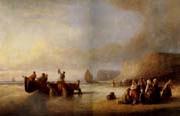 |
Delacroix Auguste 
|
|
French , 1809-1868
|
|
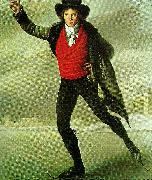 |
delafontaine
|
|
född 8 juli 1621 i Chateau-Thierry, död 13 april 1695 i Paris, var en fransk författare.
|
|
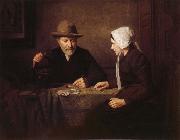 |
Delannoy jules Charles
|
|
Bethune
1852-1925
|
|
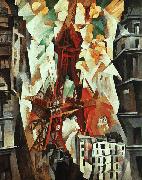 |
Delaunay, Robert
|
|
French Cubist Painter, 1885-1941
French painter, printmaker and writer. Taking Cubism as one of his points of departure, he first developed a vocabulary of colour planes only distantly dependent on observed motifs, and by the 1930s he had arrived at a purely self-sufficient language of geometric forms. He remained active as a theoretician until the end of his life,
|
|
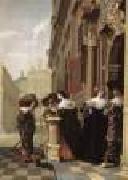 |
DELEN, Dirck van
|
|
Dutch painter (1604/5-1671)
Dutch painter. When he married in 1625 he was a citizen of Middelburg, but he settled in nearby Arnemuiden, where he became master of the toll-house. From 1628 until his death he was almost continually a member of the town council, mostly as burgomaster. He was widowed three times and had at least one son, though no children survived him.
|
|
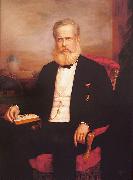 |
Delfim da Camara
|
|
painted Portrait of Dom Pedro II in 1875
|
|
 |
Demetrio Cosola
|
|
San Sebastiano,Po 1851-1895 Chivasso
|
|
 |
Demont-Breton Virginie
|
|
French Painter ,1859-Wissant 1935
|
|
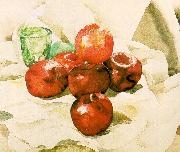 |
Demuth, Charles
|
|
American Precisionist Painter, 1883-1935
American painter and illustrator. He was deeply attached to Lancaster, where his family had run a tobacco shop since 1770. Although not a Regionalist, Demuth maintained a strongly localized sense of place, and Lancaster provided him with much of the characteristic subject-matter of both his early and later work. He trained in Philadelphia at the Drexel Institute of Art, Science and Industry (1901-5) and at the Pennsylvania Academy of the Fine Arts (1905-11), where his teachers included Thomas Anshutz, Henry McCarter (1864-1942), Hugh Breckenridge (1870-1937) and William Merritt Chase.
|
|
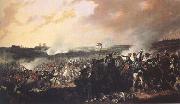 |
Denis Dighton
|
|
1792?C1827
|
|
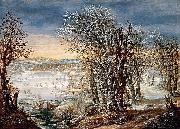 |
Denis van Alsloot
|
|
(Dutch: Denijs van Alsloot) (c. 1570, Mechelen - c. 1626) was a Flemish Baroque painter.
He initially painted using the style of Gillis van Coninxloo, but after 1610 gradually developed a style of his own. This style can be seen in paintings such as The feast of the Ommegang (Museo del Prado, Madrid) and Procession to Mary at the Zavel in Brussels (Victoria and Albert Museum, London).
At the beginning of the 17th century, in either 1600 or 1606, his career rose when he served as court painter to Albert and Isabella.
Hendrick de Clerck sometimes painted the people (Dutch: stoffering or stoffage) in his landscape works.
Van Alsloot's work can be regarded as a precursor to modern Landscape art.
|
|
 |
Dennis Miller Bunker
|
|
1861-1890
Dennis Miller Bunker Gallery
The paintings of Bunker's early maturity in New York (ca. 1880-82) were often marine subjects, featuring a series of beached boats, painted on Long Island. In these he followed the standard academic practice of first painting loose, preparatory sketches (Beached, ca. 1881-2) prior to more conventionally finished exhibition pieces. The early portraits (Portrait of Walter Griffin, 1881, Portland Museum of Art) also evidence rigorous craftsmanship.
While studying in Paris, Bunker's summer excursions to the countryside resulted in another series, this time of scenes of Larmor, a town in Brittany. The focus of these compositions, be it church spire (Brittany Town Morning, Larmor, 1884, Terra Foundation for American Art), cemetery cross, or a lone tree (Tree, 1884-5, private collection), was invariably that of a richly painted, dark graphic shape against a bright sky. Nevertheless, the pictures are characterized by soft atmospheric effects and tonal subtlety. No less subtle are the landscapes Bunker painted after returning to America; paintings done in South Woodstock, Connecticut (Pines Beyond the Fence, 1886, private collection) still favor dramatic value contrasts, with subjects carefully painted against a light sky, but the palette has grown lighter, the color more saturated.
By 1887 Bunker completed his Portrait of Anne Page, a painting requiring much labor, but one of his most poignant works. In its restrained use of color, delicate modeling of form, and aesthetic elegance it is reminiscent of the works of Thayer and James McNeill Whistler. There soon followed the Boston commissions, portraits mostly of male sitters--still somber in tone, they are painted in a more confident manner, suggesting the influence of Sargent (Portrait of George Augustus Gardner, 1888, Museum of Fine Arts, Boston).
Portrait Sketch of Eleanor Hardy Bunker, 1890. Private collection.That Bunker spent the summer of 1888 painting with Sargent is verified by personal correspondence, as well as through several pieces by the latter artist (Dennis Miller Bunker Painting at Calcot, 1888, Terra Foundation for American Art), but no paintings of the English sojourn by Bunker have survived; possibly he destroyed them in dissatisfaction. However, once back in Boston the experience came to fruition, for over the next two years Bunker produced a series of canvases which evidenced that he was one of the first American artists to fully understand and successfully practice impressionism. In the Greenhouse, ca. 1888, Chrysanthemums, 1888 (Isabella Stewart Gardner Museum), The Pool, Medfield, 1889 (Museum of Fine Arts, Boston), and Meadow Lands, 1890 (Museum of Fine Arts, Boston) all feature a rich palette, vertiginous compositions, and his unique "fish hook" shaped brush strokes.
At the same time, Bunker's last figure pieces remained faithful to his academic training. Jessica, 1890 (Museum of Fine Arts, Boston), The Mirror, 1890 (Terra Foundation for American Art), and Eleanor Hardy Bunker, 1890 (Metropolitan Museum of Art) are characterized by a restricted color range and heightened elegance.
|
|
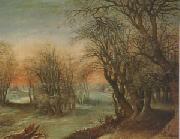 |
Denys Van Alsloot
|
|
Malines 1570-Brussels 1628
|
|
 |
DERUET, Claude
|
|
French Baroque Era Painter, 1588-1660
was a famous French Baroque painter of the 17th century, from the city of Nancy. Deruet was an apprentice to Jacques Bellange, the official court painter to Charles III, Duke of Lorraine. He was in Rome between ca. 1612 and 1619, where - according to Andre Felibien - he studied with the painter and etcher Antonio Tempesta. During his stay in Rome, he painted the Japanese samurai Hasekura Tsunenaga on a visit to Europe in 1615. Deruet was made a noble by the Duke of Lorraine in 1621, and was then made a Knight of the Order of St Michel in 1645 by Louis XIII, who had in 1641 absorbed most of Lorraine into France. He had a luxurious residence in Nancy, named La Romaine, where Louis XIII and his Queen stayed in 1633. Claude Lorrain was an apprentice to Claude Deruet in 1623 for one year.
|
|
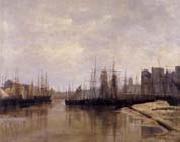 |
Desavary Charles
|
|
French ,
1837-1885
|
|
 |
DeScott Evans
|
|
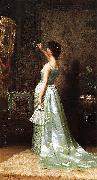
born David Scott Evans (March 28, 1847-July 4, 1898) was an American artist who worked in Indiana, Ohio and New York. He was known for portraits, still lifes, landscapes and other genres.
Born in Boston, Indiana to David S. and Nancy A. (Davenport) Evans. His father was a physician. Evans changed his signature to D. Scott Evans and later to De Scott Evans. He also signed paintings with the names David Scott, S. S. David, and Stanley S. David. He attended Miami University's preparatory school in the 1860s, studying with professor Adrian Beaugureau at Miami and later in Cincinnati. Evans married Alice Josephine Burk in 1872. They had two biological daughters, Mabel and Nancy, and an adopted daughter, Laura.
In 1873, he became head of the art department at Mount Union College and after several terms there, he moved to Cleveland to teach and to paint. From Cleveland, he moved to New York. He died along with 500 other passengers and crew, including his three daughters when the French steamer La Bourgogne was rammed by a sailing ship in July 1898. His wife was not on board and later remarried.
Though he died at sea, there is a cenotaph for Evans and his daughters in the Oxford Cemetery in Oxford, Ohio.
|
|
 |
desnoyer
|
|
|
|
 |
DIANA, Benedetto
|
|
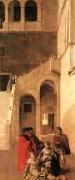
Italian painter, Venetian school (known 1482-1525 in Venice)
|
|
 |
diane
|
|
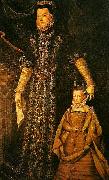
comtesse de guiche, known as la belle corisande with her daughter
1580
collection duc de grammont
|
|
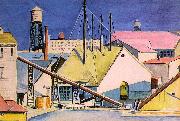 |
Dickinson, Preston
|
|
American Precisionist Painter, 1891-1930
American painter, b. New York City. In New York he studied at the Art Students League. From 1910 to 1915 he traveled in Europe, returning often later in life. His still lifes and landscapes in oil and watercolor are built up of highly colorful planes.
|
|
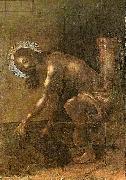 |
Diego de Carpio
|
|
painted Christ gathering his clothes after the Flagellation in 1798
|
|
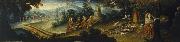 |
Diego Quispe Tito
|
|
(1611-1681) was a Peruvian painter. He is considered the leader of the Cuzco School of painting.
The son of a noble Inca family, Quispe Tito was born in Cuzco, and worked throughout his life in the district of San Sebastien; his house is still extant, and shows his coat of arms on its door. His earliest signed painting is an Immaculate Conception from 1627, gilded in a fashion typical of the Cuzco school. The work's elongated forms reveal a knowledge of Mannerism; where Quispe Tito learned the style is unknown, but it is hypothesized that he encountered it in the work of Italian Jesuit Bernardo Bitti, who was active at the time in Cuzco. In addition, he is believed to have known Luis de Riaño in his youth, and may have derived some elements of his style from the older artist; de Riaño, a painter from Lima, had trained in the workshop of Angelino Medoro, and so would have provided another source of Italian influence.
Quispe Tito also was influenced in his work by engravings from Flanders; indeed, his best-known work, the 1681 Signs of the Zodiac in Cuzco Cathedral, is a series of copies of Flemish engravings in which each zodiac sign is tied to a parable from the life of Christ. These engravings were designed for distribution in Peru, where worship of the sun, moon, and stars was still practiced in some quarters; they were designed to encourage worship of Christ and His miracles in place of the zodiac. A further series, depicting scenes from the life of John the Baptist and dating to 1663, was also produced on Flemish models.
|
|
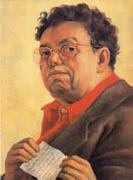 |
Diego Rivera
|
|
Mexican Social Realist Muralist, 1886-1957,Mexican muralist. After study in Mexico City and Spain, he settled in Paris from 1909 to 1919. He briefly espoused Cubism but abandoned it c. 1917 for a visual language of simplified forms and bold areas of colour. He returned to Mexico in 1921, seeking to create a new national art on revolutionary themes in the wake of the Mexican Revolution. He painted many public murals, the most ambitious of which is in the National Palace (1929 ?C 57). From 1930 to 1934 he worked in the U.S. His mural for New York's Rockefeller Center aroused a storm of controversy and was ultimately destroyed because it contained the figure of Vladimir Ilich Lenin; he later reproduced it at the Palace of Fine Arts in Mexico City. With Jose Clemente Orozco and David Alfaro Siqueiros, Rivera created a revival of fresco painting that became Mexico's most significant contribution to 20th-century art. His large-scale didactic murals contain scenes of Mexican history, culture, and industry, with Indians, peasants, conquistadores, and factory workers drawn as simplified figures in crowded, shallow spaces. Rivera was twice married to Frida Kahlo.
|
|
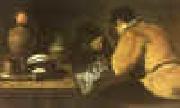 |
Diego Velazquez
|
|
Spanish Baroque Era Painter, 1599-1660
Spanish painter. He was one of the most important European artists of the 17th century, spending his career from 1623 in the service of Philip IV of Spain. His early canvases comprised bodegones and religious paintings, but as a court artist he was largely occupied in executing portraits, while also producing some historical, mythological and further religious works. His painting was deeply affected by the work of Rubens and by Venetian artists, especially Titian, as well as by the experience of two trips (1629-31 and 1649-51) to Italy. Under these joint influences he developed a uniquely personal style characterized by very loose, expressive brushwork. Although he had no immediate followers, he was greatly admired by such later painters as Goya and Manet
|
|
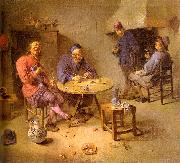 |
Diepraam, Abraham
|
|
Dutch Baroque Era Painter, ca.1622-1670
|
|
 |
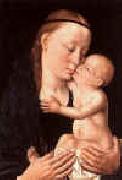
dierec bouts
|
|
c. 1415-1475
He was an Early Netherlandish painter.
According to Karel van Mander in his Het Schilderboeck of 1604, Bouts was born in Haarlem and was mainly active in Leuven (Louvain), where he was city painter from 1468. Van Mander confused the issue by writing biographies of both "Dieric of Haarlem" and "Dieric of Leuven," although he was referring to the same artist. The similarity of their last names also led to the confusion of Bouts with Hubrecht Stuerbout, a prominent sculptor in Leuven. Very little is actually known about Bouts' early life, but he was greatly influenced by Jan van Eyck and by Rogier van der Weyden, under whom he may have studied. He is first documented in Leuven in 1457 and worked there until his death in 1475.
|
|
 |
Dieric Bouts
|
|
1420-1475 Flemish Dieric Bouts Locations
Dirk Bouts whose real name was Theodorik Romboutszoon, was probably born in Haarlem, where he may have studied under the painter Albert van Ouwater. Sometime before 1450 Bouts took up residence in the Flemish city of Louvain. His name appeared in the records of Louvain in 1457 and again in 1468, when he was appointed "city painter."
It is likely that Bouts spent some time in Bruges, as his earliest work, the Infancy Altarpiece shows the distinct and strong influence of Petrus Christus, the leading master of that city after the death of Jan van Eyck. The slightly later Deposition Altarpiece (ca. 1450) displays strong connections with the style of Rogier van der Weyden in both the figure types and the composition. About 1460, the period of the Entombment in London, the early, formative influence of Petrus Christus had been almost totally displaced by that of Rogier, though Bouts personal vision began to emerge in the fluid and continuous landscape background.
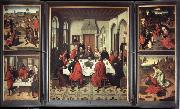
The great Last Supper Altarpiece (1464-1467) marks the high point of Bouts career. In this solemn and dignified masterpiece the painter achieved spiritual grandeur in the context of convincing physical reality. The central panel of the altarpiece is the most emphatically significant treatment of the theme of the Last Supper in Northern European art. The wings, which contain Old Testament prefigurations of the central theme, are freer and more loosely organized. Eschewing the symmetry and rigid axial construction of the main panel, Bouts produced rhythmic foreground compositions in combination with fluid and dramatic spatial recessions.
In 1468 Bouts was commissioned to paint four panels on the subject of justice for the Town Hall of Louvain. At the painter death in 1475 only two of the paintings had been completed; they are among the most remarkable productions of his career. The unusual subjects, taken from the chronicles of a 12th-century historian, concern the wrongful execution by Emperor Otto III of one of his counts and the subsequent vindication of the nobleman by his wife. The finer of the panels represents the dramatic trial by fire which the wife was obliged to undergo to prove her husband innocence. Rich draperies and sumptuous colors are applied to tall angular forms to create a work of rare formal elegance and high decorative appeal. In order to dignify the event, however, the artist has employed restrained gestures and expressions as well as a completely rationalized spatial setting. As in the Last Supper Altarpiece, a sense of solemn and hieratic importance is expressed by means of an austere and rigid geometry in the construction of both persons and places.
The late productions of Bouts workshop, such as the well-known Pearl of Brabant Altarpiece, are characterized by the close collaboration of the painter two sons, Dirk the Younger (1448-1491) and Aelbrecht (1455/1460-1549). In the paintings of his less gifted sons, the master distinctive figure style was appreciably altered, though Dirk the Younger appears to have retained much of his father sensitivity to the landscape.
In addition to his innovations in the depiction of landscape, Bouts made a substantial contribution to the development of the portrait. His Portrait of a Man (1462) localizes the sitter in an enlarged architectural setting while permitting the interior space to merge with the exterior through an open window. For the first time in Northern painting a common bond was forged between a particularized individual and the universal world of nature.
|
|
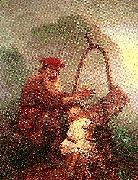 |
diisseldorf
|
|
|
|
 |
DIJCK, Floris Claesz van
|
|
Dutch Baroque Era Painter, 1575-1651
|
|
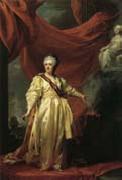 |
Dimitri Levitzky
|
|
Ukrain portrait painter , 1735-1822
|
|
|
|
dioscoro teofilo de la puebla tolin
|
|
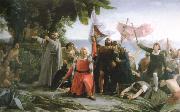
dioscoro teofilo de la puebla tolin(1831 to1901),who studied in madrid and rome,worked in the tradition fo historicism,asubgenre of history painting,which focused on the interplay of religious pride,patriotism ,and sntions of glory.tolin s technical style is referred to as eclecticism for its wide ranging,and often superficial ,borrowing from euopean techniques and visual trends. paintings in this genre were often funded by official organizations and art academies,which treated them as opportuities for propagandistic interpretations of history.the first landing of christopher columbus in america provides on shortage of drama
|
|
 |
dioscoro teofilo puebla tolin
|
|
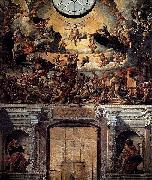
dioscoro teofilo puebla tolin(1831 to1901),who studied in madrid and rome,worked in the tradition fo historicism,asubgenre of history painting,which focused on the interplay of religious pride,patriotism ,and sntions of glory.tolin s technical style is referred to as eclecticism for its wide ranging,and often superficial ,borrowing from euopean techniques and visual trends. paintings in this genre were often funded by official organizations and art academies,which treated them as opportuities for propagandistic interpretations of history.the first landing of christopher columbus in america provides on shortage of drama
|
|
 |
Dirck Barendsz
|
|
(1534?C1592) was a Dutch Renaissance painter from Amsterdam who traveled to Italy in his youth to learn from the Italian masters, most notably Titian.
|
|
 |
Dirck Bouts
|
|
Haarlem ca 1420-Louvain 1475
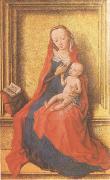
was an Early Netherlandish painter. According to Karel van Mander in his Het Schilderboeck of 1604, Bouts was born in Haarlem and was mainly active in Leuven (Louvain), where he was city painter from 1468. Van Mander confused the issue by writing biographies of both "Dieric of Haarlem" and "Dieric of Leuven," although he was referring to the same artist. The similarity of their last names also led to the confusion of Bouts with Hubrecht Stuerbout, a prominent sculptor in Leuven. Very little is actually known about Bouts' early life, but he was greatly influenced by Jan van Eyck and by Rogier van der Weyden, under whom he may have studied. He is first documented in Leuven in 1457 and worked there until his death in 1475. Bouts was among the first northern painters to demonstrate the use of a single vanishing point
|
|
 |
Dirck de Quade van Ravesteyn
|
|
Flemish painter 1565-1620
|
|
 |
Dirck Hals
|
|
Dutch
1591-1656
Dirck Hals Galleries
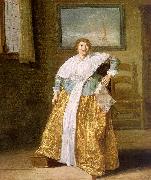
Dirck Hals (born at Haarlem, 1591-1656) was a Dutch painter of festivals and ballroom scenes. He was influenced by his elder brother Frans Hals.
|
|
 |
Dirck van Delen
|
|
1604-1671
Dutch
Dirck van Delen Location
Dutch painter. When he married in 1625 he was a citizen of Middelburg, but he settled in nearby Arnemuiden, where he became master of the toll-house. From 1628 until his death he was almost continually a member of the town council, mostly as burgomaster. He was widowed three times and had at least one son, though no children survived him. The inventory of his estate testifies that he was well-to-do.
|
|
 |
Dirck van Baburen
|
|
b.c. 1595, Utrecht, Netherlands.
d.Feb. 21, 1624, Utrecht
Dutch
Dirck van Baburen Gallery
|
|
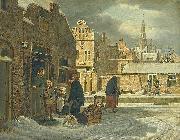 |
Dirk Jan van der Laan
|
|
painted Cityscape in winter. in between 1790(1790) and 1813(1813)
|
|
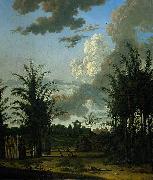 |
Dirk Valkenburg
|
|
(1675, Amsterdam - 1721, Amsterdam), was a Dutch Golden Age painter.
According to the RKD he was a pupil of Michiel van Musscher, Herman van Vollenhove, and Jan Weenix. In 1698 he worked in Vienna for the Prince of Liechtenstein, and from 1706-1707 he travelled to Surinam to draw the native plants and birds for the wealthy city secretary of Amsterdam, Jonas Witsen, who owned a plantation there and whom he met through his teacher Musscher.
He is known for exotic landscapes, paintings of birds, and fruit and flower still lifes.
|
|
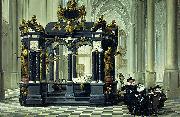 |
Dirk van Delen
|
|
(born ca. 1605 - died May 16, 1671) was a Dutch Golden Age painter.
According to Houbraken, he was born in Heusden, and was a student of Frans Hals. In 1626 he moved to Zeeland and became mayor of Arnemuiden. He specialized in architectural studies.
Shortly after he was born his parents moved to Breda. He married in Middelburg in 1625. Though he is registered in Arnemuiden from the following year until his death, he became a member of the Middelburg Guild of St. Luke from 1639-1665. In 1666 he gave a painting to the Antwerp chamber of rhetoric Olyftak, that was a collaboration with the painter Theodoor Boeyermans. In 1668 he became a member of the Olyftak. The staffage of his baroque churches has at times been attributed to other painters, such as Anthonie Palamedesz, Dirck Hals, and Pieter Codde. He died in Arnemuiden.
|
|
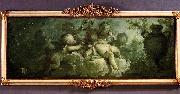 |
Dirk van der Aa
|
|
Dirk van der Aa , 1731 -- February 23, 1809.
He was born in The Hague, and first apprenticed to Johann Heinrich Keller, and then to Gerrit Mes with whom he would later start a workshop; they specialized in grisaille decorative paintings. He counted Evert Morel, Cornelis Kuipers, Johan Christiaan Roedig and Andries van der Aa amongst his students. He died in his home city of The Hague.
|
|
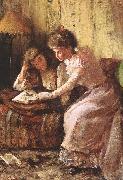 |
Dixon, Maria
|
|
American Painter, 19th Century
|
|
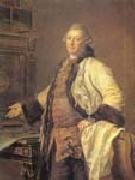 |
Dmitry Levitzky
|
|
1735-1822) was a Russian-Ukrainian portrait painter.
Dmitry was born in Kiev, Ukraine, in a family of clergyman and engraver Grigory Levitzky. His father was his first art teacher. Later be became a pupil of Aleksey Antropov who came to Kiev to paint the Cathedral of St. Andrew.
In 1770, Levitzky became famous as a portrait painter after the exhibition of six of his portraits in the Imperial Academy of Arts in St. Petersburg. For the portrait of Alexander Kokorinov, Director and First Rector of the Academy of Arts in St. Petersburg (1769) he was elected an academician and appointed the Professor of the portrait painting class at the Academy of Arts.
|
|
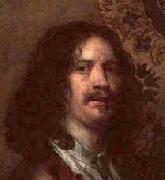 |
DOBSON, William
|
|
English Baroque Era Painter, ca.1611-1646
English painter. His father, William Dobson, was a gentleman of St Albans employed by Francis Bacon, Viscount Verulam, on the building and decoration at Verulam House and Gorhambury; he was also probably Master of the Alienation Office and a member of the Painter-Stainers' Company, but according to John Aubrey, 'he spending his estate luxuriously upon women, necessity forced his son William Dobson to be the most excellent painter
|
|
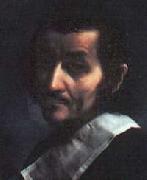 |
DOLCI, Carlo
|
|
Italian Baroque Era Painter, 1616-ca.1686
was an Italian painter of the Baroque period, active mainly in Florence, known for highly finished religious pictures, often repeated in many versions. He was born in Florence, on his mother's side the grandson of a painter. Although he was precocious and apprenticed at a young age to Jacopo Vignali, Dolci was not prolific. "He would take weeks over a single foot", according to his biographer Baldinucci.His painstaking technique made him unsuited for large-scale fresco painting. He painted chiefly sacred subjects, and his works are generally small in scale, although he made a few life-size pictures. He often repeated the same composition in several versions, and his daughter, Agnese Dolci, also made excellent copies of his works. Dolci was known for his piety. It is said that every year during Passion Week he painted a half-figure of the Saviour wearing the Crown of Thorns. In 1682, when he saw Giordano,
|
|
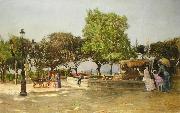 |
Domenica Battaglia
|
|
painted La Fontana delle Paperelle, Napoli, in
1842/46-1904
|
|
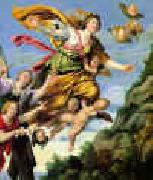 |
Domenichino
|
|
1581-1641
Italian
Domenichino Locations
Italian painter and draughtsman. On the basis of his frescoes and altarpieces he became established as the most influential exponent of the 17th-century classical style. Through his critical analysis of the art of Raphael and Annibale Carracci he was influential in the creation of a modern canon of the ancients; and he was perhaps the most complete example of a 17th-century artist struggling to reconcile tradition with the demand for spectacle.
|
|
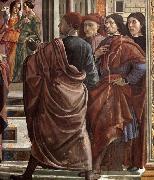 |
Domenicho Ghirlandaio
|
|
Renaissance Artists , 1449-94
|
|
 |
Domenico Feti
|
|
1589-1625
Italian
Domenico Feti Locations
Italian painter. Court painter to the Gonzaga family in Mantua, Feti was influenced by the chiaroscuro technique of Caravaggio. His later works, such as Melancholia (Louvre), belong, in their use of color, to the Venetian tradition.
|
|
|
|
|
|
|
|
|
| Wholesale China Oil Painting Wholesale Oil Painting China Xiamen Portrait Reproduction on canvas Chinese Oil Painting Wholesale USA Oil Painting |
|
|
|
|


