|

|
|
| |
|
China Oil Painting Direct
|
|
100% hand painted, 100%
cotton canvas,
100% money back if not satisfaction.
|
|
|
|
ART WORKS
INDEX
A B C D E F G H I J K L M N O P Q R S T U V W X Y Z
|
|
ARTISTS
INDEX
A B C D E F G H I J K L M N O P Q R S T U V W X Y Z
|
|
|
|
 |
ABBATE, Niccolo dell 
|
|
Italian Mannerist Painter, ca.1512-1571
Italian painter. He was trained in Modena and developed his mature style under the influence of his contemporaries Correggio and Parmigianino in Bologna (1544 ?C 52). There he painted portraits and decorated palaces with frescoes of landscapes and figure compositions in the Mannerist style. In 1552 he was invited by Henry II of France to work under Primaticcio at the Palace of Fontainebleau, where he executed immense murals (most now lost). He remained in France the rest of his life. His mythological landscapes were a principal source of the French Classical landscape tradition, and he was a precursor of Claude Lorrain and Nicolas Poussin.
|
|
 |
ABILDGAARD Nicolai
|
|
Nikolaj Abraham Abildgaard (September 11, 1743 - June 4, 1809), Danish artist, was born in Copenhagen, the son of Søren Abildgaard, an antiquarian draughtsman of repute, and Anne Margrethe Bastholm.
|
|
 |
Adelsteen Normann
|
|
Adelsteen Normann (1 May 1848 - 26 December 1918) was a Norwegian painter who worked in Berlin. He was a noted painter of landscapes of Norway. Normann was the artist who invited Edvard Munch to Berlin, where he painted The Scream. Normann's fjord paintings are credited with making the Norwegian fjords a more popular tourist destination.
|
|
 |
Aert van der Neer
|
|
1603-1677
Dutch
Although generally known by the name of Aert, he usually signed himself Aernout. According to Houbraken, van der Neer spent his youth in Arkel near Gorinchem (Gorkum), a town on the river Waal, east of Dordrecht, where he worked as a majoor (steward) for the lords of Arkel. He became an amateur painter, possibly as a result of his contact with the Camphuyzen brothers Rafael Govertsz. (1597/8-1657) and Jochem Govertsz. (1601/2-59). Aert married Lysbeth Govertsdr (Liedtke) who was almost certainly Rafael and Jochem sister. Rafael acted as witness at the baptism of their daughter Cornelia in 1642. Around 1632 van der Neer and his wife moved to Amsterdam where, in about 1634, their eldest son, Eglon, was born.
|
|
 |
Alexander Nasmyth
|
|
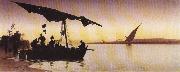
Scottish Painter,
1758-1840
was a Scottish portrait and landscape painter, often called the father of Scottish landscape painting". Edinburgh Castle and Nor'Loch, circa 1780.Born in Edinburgh, he studied at the Royal High School and the Trustees Academy under Alexander Runciman, and, having been apprenticed as an heraldic painter to a coachbuilder, he, at the age of sixteen, attracted the attention of Allan Ramsay, who took the youth with him to London, and employed him upon the subordinate portions of his works. Nasmyth returned to Edinburgh in 1778, and was soon largely patronized as a portrait painter. He also assisted Mr Miller of Dalswinton, as draughtsman, in his mechanical researches and experiments; and, this gentleman having generously offered the painter a loan to enable him to pursue his studies abroad, he left in 1782 for Italy, where he remained two years. Robert Burns, 1787.On his return he painted the excellent portrait of Robert Burns, now in the Scottish National Gallery, well known through Walker's engraving. Political feeling at that time ran high in Edinburgh, and Nasmyth's pronounced Liberal opinions, which he was too outspoken and sincere to disguise, gave offence to many of his aristocratic patrons, and led to the diminution of his practice as a portraitist. In his later years, accordingly, he devoted himself mainly to landscape work, and did not disdain on occasion to set his hand to scene-painting for the theatres. He has been styled, not unjustly, the father of Scottish landscape arte His subjects are carefully finished and coloured, but are wanting in boldness and freedom.
|
|
 |
Alexandre N. Roussoff
|
|
Russian, 1844 - 1928
|
|
 |
Ali She Nawat
|
|
1440-1501
|
|
 |
Alphonse-Marie-Adolphe de Neuville
|
|
(31 May 1835 - 18 May 1885) was a French Academic painter who studied under Eugene Delacroix. His dramatic and intensely patriotic subjects illustrated episodes from the Franco-Prussian War, the Crimean War, the Zulu War and portraits of soldiers. Some of his works have been collected by the Hermitage Museum in St. Petersburg and by the Metropolitan Museum in New York.
The Last Cartridges, 1873
The Defence of Rorke's Drift, oil on canvas painting by Alphonse-Marie-Adolphe de Neuville, 1880, Art Gallery of New South Wales. This incident occurred on 22 January 1879, in the Anglo-Zulu War.
La bataille de VillersexelHe was born to wealthy parents at Saint-Omer, Pas-de-Calais. From school he went to college, where he took his degree of bachelier -lettres. In spite of the opposition of his family he entered the naval school at Lorient, and it was there, in 1856, that his artistic instincts first declared themselves.
After being discouraged by several painters of repute, he was admitted to work in François-Edouard Picot's studio. He did not remain there long, and he was painting by himself when he produced his first picture, The Fifth Battalion of Chasseurs at the Gervais Battery (Malakoff). In 1860 Neuville painted an Episode of the taking of Naples by Garibaldi for the Artists' Club in the rue de Provence, and sent to the Paris Salon in 1861 The Guard Chasseurs in the Trenches of the Mamelon Vert.
He participated in illustrating the Hetzel editions of Twenty Thousand Leagues Under the Sea. He also illustrated Le Tour du monde and Guizot's History of France. At the same time he painted a number of remarkable pictures: The Attack in the Streets of Magenta by Zouaves and the Light Horse (1864), A Zouave Sentinel (1865), The Battle of San Lorenzo (1867), and Dismounted Cavalry crossing the Tchernaia (1869). In these he showed peculiar insight into military life, but his full power was not reached until after the Franco-Prussian War. He then aimed at depicting in his works the episodes of that war, and began by representing the Bivouac before Le Bourget (1872). His fame spread rapidly, and was increased by The Last Cartridges (1873), memorializing an episode involving the Blue Division of the French marines, in which it is easy to discern the vast difference between the conventional treatment of military subjects, as practised by Horace Vernet, and that of a man who had lived the life that he painted.
In 1874 the Fight on a Railroad was not less successful, and was followed by the Attack on a House at Villersexel (1875) and the Railway Bridge at Styring (1877). In 1878 the painter exhibited (not at the Great Exhibition) Le Bourget, the Surprise at Daybreak, The Intercepted Despatch-bearer, and a considerable number of drawings. He also exhibited in London some episodes of the Zulu War. Fifty thousand people paid to see his impression of The Defence of Rorke's Drift (1880), which the infant Art Gallery of New South Wales in Sydney paid a large sum to acquire.
In 1881 he was made an officer of the Legion d'honneur for The Cemetery of Saint-Privat and The Despatch-bearer and the "Huns in the Battle of Chalon." During these years Neuville was at work with Édouard Detaille on an important though less artistic work, The Panorama of Rezonville. Neuville died in Paris on May 18, 1885. At the sale of his works the state purchased for the Palais du Luxembourg the Bourget and the Attack on a Barricaded House, with a water-color The Parley, and a drawing of a Turco in Fighting Trim.
|
|
 |
Amaldus Clarin Nielsen
|
|
(23 May 1838 - 10 December 1932) was a Norwegian painter.
He was born in Halse as a son of shipmaster and merchant Niels Clemetsen Nielsen (1795 - 1845) and his wife Andrea Marie Møller (1802 - 1866). He grew up in Mandal in Vest-Agder county, Norway. He lived most of his childhood and adolescence without a father. He received some tuition from a traveling drawing teacher and traveled to Copenhagen to study in 1854
|
|
 |
Anna Munthe-Norstedt
|
|
painted Still Life with Spring Flowers in 1892
|
|
 |
Anna Nordgren
|
|
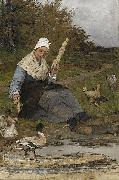
painted Farmer Woman At The Beach in 1880
|
|
 |
Anne Baptiste Nivelon
|
|
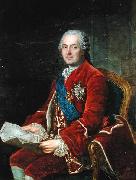
Portrait de Louis de France, dauphin (1729 - 1765) represente tenant des plans militaires
|
|
 |
Antoine Le Nain
|
|
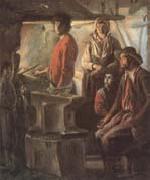
French Baroque Era Painter, ca.1600-1648,The three were born in Laon (Mathieu in 1607; Antoine and Louis were originally believed to have been born in 1588 and 1593, respectively, but those dates have since been disputed: they may have instead been born just before and just after 1600), and by 1630, all three lived in Paris. Because of the remarkable similarity of their styles of painting and the difficulty of distinguishing works by each brother (they signed their paintings only with their surname, and many may have been collaborations), they are commonly referred to as a single entity, Le Nain. Louis is usually credited with the best-known of their paintings, a series of scenes depicting peasant life. These genre paintings are often noted for being remarkably literal, yet sympathetic; the subjects are never grotesque or seem ridiculed. There remains some question, however, as to whether some of the assumed "peasants" were truly from the rural class--many seem to be simply the bourgeois at leisure in the country. The brothers also produced miniatures (mainly attributed to Antoine) and portraits (attributed to Mathieu). Mathieu became the official painter of Paris in 1633, and was made a chevalier. Antoine and Louis died in 1648. Mathieu lived until 1677. The Le Nain paintings had a revival in the 1840s and, thanks to the exertions of Champfleury, made their appearance on the walls of the Louvre in 1848.
|
|
 |
Asta Norregaard
|
|
impression artist
1853-1933
|
|
 |
August Neven du Mont
|
|
August Ludwig Mathaeus Neven du Mont (1866-1909) was a German Painter, Master of Foxhounds for East Sussex and aristocrat. Very famous and popular during his lifetime he went from very successful to almost unknown after his early death in 1909. Historian Paul Clemen wrote two books about the life and work of the artist as well as one booklet which was never published. Most of Neven du Mont's Paintings were portraits for which he was most known. In July 1909, he died in his Manor House in Bexhill of which he was the last tenant before its destruction. He was also an ancestor of the well known German actor Sky du Mont.
|
|
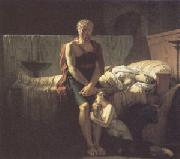 |
Baron Pierre Narcisse Guerin
|
|
Paris 1774-Rome 1833
French painter. He won enthusiastic recognition in 1799 for his Marius Sextus (Louvre). A defender of the classicism of J. L. David, he became director of the École de Rome in 1822. He counted among his pupils Delacroix, G??ricault, and Ary Scheffer, who were to launch the romantic school.
|
|
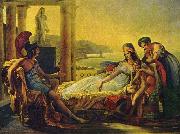 |
Baron Pierre-Narcisse Guerin
|
|
(13 May 1774 - 6 July 1833) was a French painter.
Guerin was born in Paris.
A pupil of Jean-Baptiste Regnault, he carried off one of the three grands prix offered in 1796, in consequence of the competition not having taken place since 1793. In 1799, his painting Marcus Sextus (Louvre) was exhibited at the Salon and excited wild enthusiasm. Part of this was due to the subject - a victim of Sulla's proscription returning to Rome to find his wife dead and his house in mourning - in which an allusion was found to the turmoil of the French Revolution.
Guerin on this occasion was publicly crowned by the president of the Institute, and went to Rome to study under Joseph-Benoît Suvee. In 1800, unable to remain in Rome on account of his health, he went to Naples, where he painted the Grave of Amyntas. In 1802 Guerin produced Phaedra and Hippolytus (Louvre); in 1810, after his return to Paris, he again achieved a great success with Andromache and Pyrrhus (Louvre); and in the same year also exhibited Cephalus and Aurora (Louvre) and Bonaparte and the Rebels of Cairo (Versailles). These paintings suited the popular taste of the First Empire, being highly melodramatic and pompously dignified.
The Restoration brought to Guerin fresh honours; he had received from the first consul in 1803 the cross of the Legion of Honour, and in 1815 Louis XVIII named to the Academie des Beaux-Arts. His style changed to accord with popular taste. In Aeneas Relating to Dido the Disasters of Troy (Louvre), Guerin adopted a more sensuous, picturesque style.
Guerin was commissioned to paint for the Madeleine a scene from the history of St Louis, but his health prevented him from accomplishing what he had begun, and in 1822 he accepted the post of director of the French Academy in Rome, which in 1816 he had refused. On returning to Paris in 1828, Guerin, who had previously been made chevalier of the order of St. Michel, was ennobled. He now attempted to complete Pyrrhus and Priam, a work which he had begun at Rome, but in vain; his health had finally broken down, and in the hope of improvement he returned to Italy with Horace Vernet. Shortly after his arrival at Rome Baron Guerin died, on the 6th of July 1833, and was buried in the church of La Trinite de Monti by the side of Claude Lorrain.
|
|
 |
Bartolomeo Nazari
|
|
Bartolomeo Nazari (May 31, 1693 - August 24, 1758) was an Italian painter of the late-Baroque, mainly active in Venice as a portraitist.
Born in Clusone, near Bergamo. By 1716, he had become an apprentice under Angelo Trevisani, but visited in 1723 the Roman studio of Angelo's brother, the Venetian Francesco Trevisani, and then also studied with Benedetto Luti. Nazari likely knew personally Fra Galgario, the renowned portraitist from Bergamo, and is described by some as a pupil. He returns to Venice in 1724, and is registered with the Fraglia dei Pittori by 1726. In 1744, he traveled to Frankfurt to paint the emperor Charles VII and his family and other members of the court. In 1756, he was inducted into the newly founded Accademia of Venice. His son Nazario Nazari was also a painter. Among his patrons was Consul Joseph Smith and the former general Johann Matthias von der Schulenburg (who owned over eight diverse portrait paintings). He painted the portraits of a number of operatic singers including Farinelli. He died returning from Genoa, where he had painted the Doge.
|
|
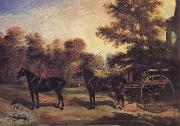 |
Benjamin Cam Norton
|
|
British, 1835-1900
|
|
 |
BERCHEM, Nicolaes
|
|
Dutch Baroque Era Painter, 1620-1683
Nicolaes Pieterszoon Berchem (1 October 1620 - 18 February 1683) was a highly esteemed and prolific Dutch painter of pastoral landscapes, populated with mythological or biblical figures, but also of a number allegories and genre pieces.
Born in Haarlem, he received instruction from his father Pieter Claesz, and from the painters Jan van Goyen, Jan Wils and Claes Cornelisz. Moeyaert. (It is not known why he called himself Berchem or Berighem, and other variants). For some time it was supposed Berchem traveled to Italy with a fellow painter Jan Baptist Weenix, whom he called his cousin. In 1645 he became a member of the Dutch reformed church and married the year after. Being a widower he married the daughter of Jan Wils. Around 1650 he did travel to Westphalia with Jacob van Ruisdael. May be Berchem went to Italy after this trip and before he moved to Amsterdam. Around 1660 he worked for the engraver Jan de Visscher designing an atlas. In 1670 he moved back to Haarlem, but Berchem died in Amsterdam in 1683.
His paintings, of which he produced an immense number, (Hofstede de Groot claimed around 850, although many are misattributed), were in great demand, as were his 80 etchings and 500 drawings. His landscapes, painted in the Italian style of idealized rural scenes, with hills, mountains, cliffs and trees in a golden dawn are sought after. Berchem also painted inspired and attractive human and animal figures in works of other artists, like Allaert van Everdingen, Jan Hackaert, Gerrit Dou, Meindert Hobbema and Willem Schellinks. The French Rococo painter Jean-Baptiste Pillement was influenced by his works.
|
|
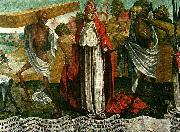 |
bernt notke
|
|
ca 1440-1509
|
|
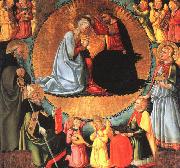 |
Bicci Di Neri
|
|
(1419-1491) was an Italian painter of the Renaissance. A prolific painter of mainly religious themes, he was active mainly in Florence and in the medium of tempera. His father was Bicci di Lorenzo. His grandfather, Lorenzo di Bicci was also a painter in Florence, a pupil of Spinello Aretino.
Neri di Bicci's main works include a St. John Gualbert Enthroned, with Ten Saints for the church of Santa Trinita, an Annunciation (1464) in the Florentine Academy, two altarpieces in the Diocesan Museum of San Miniato, a Madonna with Child Enthroned in the Pinacoteca Nazionale of Siena, and a Coronation of the Virgin (1472) in the abbey church at San Pietro a Ruoti (Bucine. He also painter numerous works in the area of Volterra.
His journals from the years 1453-1475, including the rates of remuneration for his work, are still preserved in the library of the Uffizi Gallery. They are known as Ricordanze.
|
|
 |
Bicci, Neri di
|
|
Italian Early Renaissance Painter, 1419-1491
was an Italian painter of the Renaissance. A prolific painter of mainly religious themes, he was active mainly in Florence and in the medium of tempera. His father was Bicci di Lorenzo (1373-1452). His grandfather, Lorenzo di Bicci (c. 1350-1427) was also a painter in Florence, a pupil of Spinello Aretino. He painted a St. Giovanni Gualberto enthroned, with ten Saints for the church of San Pancrazio. His journals from the years 1453-1475,
|
|
 |
BICCI, Nero di
|
|
Italian Early Renaissance Painter, 1419-1491
|
|
 |
carl kylberg
|
|
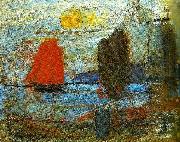
Carl Oscar Kylberg, född 23 september 1878 på Vasängen i Fridene församling, död 6 januari 1952 i Stockholm, svensk konstnär och representant för Göteborgskoloristerna.
Carl Kylberg var son till kontorschef Gustaf Kylberg och friherrinnan Eleonora von Essen och storebror till konstnären Erik Kylberg. Hans fastrar och farbror var konstnärerna Regina Kylberg-Bobeck, Marina Kylberg och Hjalmar Kylberg. Farfadern Lars Wilhelm Kylberg var konstnär vid sidan av lantbruket på familjegodset Såtenäs i Västergötland.
Kylberg studerade först vid tekniska skolan i Stockholm och i Berlin för att bli arkitekt men övergick till måleri omkring 1900. Han studerade under en tid vid Valand i Göteborg som elev till Carl Wilhelmson. Hans verk kännetecknas ofta av ett glödande oljemåleri med starka färger och han avbildade ofta landskap och figurkompositioner på ett avskalat man??r. Under senare delen av sitt konstnärskap skapade han en mängd religiösa motiv.
Kring 1930-talet fick han sitt genombrott och han kom att ställa ut, förutom i Sverige även i Köpenhamn, Paris, London, Budapest och i USA men hans måleri var för många provocerande och 1938 gick regeringen in och stoppade ett köp av målningen Uppbrottet för Nationalmuseum i Stockholm.
En av hans mest välkända målningar är Hemkomsten från 1938 som hänger på Göteborgs konstmuseum och som föreställer ett skepp i silhuett mot en nästan brinnande gul himmel och ett rödfärgat hav. Denna målning förevigades också 1978 på ett svenskt frimärke av valören 90 öre.
Sedan 1980-talet har många av hans tavlor sålts för rekordpriser vid olika internationella konstauktioner.
|
|
 |
Carl Nebel
|
|
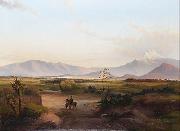
Carl/Carlos Nebel (March 18, 1805 - June 4, 1855) was a German engineer, architect and draughtsman, best known for his detailed paintings of the Mexican landscape and people and of the battles of the Mexican-American War.
Nebel was born at Altona, today a part of Hamburg. After studies in Hamburg and Paris, he travelled to America, where he was a resident of Mexico from 1829 until 1834. In 1836, he published in Paris his renowned illustrated work on that country-Voyage pittoresque et archeologique dans la partie la plus interessante du Mexique, with 50 lithographs made from his paintings, twenty of which were hand-colorized, and an introduction written by Alexander Humboldt.
|
|
 |
carl neumann
|
|
|
|
 |
Carlo Francesco Nuvolone
|
|
Italian Baroque Era Painter, 1609-1662
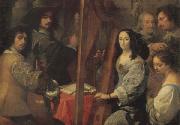
was an Italian painter of the Baroque period, active mainly in Lombardy. He was born in Milan to an Cremonese father and mannerist painter, Panfilo Nuvolone. After working with his father, he studied under Giovanni Battista Crespi (il Cerano) in the Accademia Ambrosiana in Milan. In that studio he would have encountered Daniele Crespi and Giulio Cesare Procaccini. Of particular interest is his depiction of himself as a painter surrounded by his family of artists
|
|
 |
Casper Netscher
|
|
Dutch Baroque Era Painter, ca.1635-1684
|
|
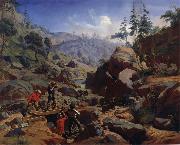 |
Charles Christian Nahl and august wenderoth
|
|
German-born American Painter, 1818-1878
American, 1819-1884
|
|
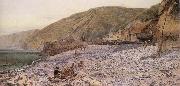 |
Charles Napier Hemy
|
|
English Painter, 1841-1917, British painter, He was born at Newcastle-on-Tyne, of a musical family. He was trained in the Government School if Design, Newcastle, in the Antwerp academy and in the studio of Baron Leys. He returned to London in the 1870s. In 1881, he moved to Falmouth, Cornwall. He produced some figure subjects and landscapes, but is best known by his marine paintings. He was elected an Associate of the Royal Academy in 1898 and an Academician in 1910, Associate of the Royal Society of Painters in Water Colours in 1890 and member in 1897. Two of his paintings, "Pilchards" (1897) and "London River" (1904), are in the Tate collections. He had two brothers who were also artists, Thomas Hemy and Bernard Hemy. He died in Falmouth on September 30, 1917.
|
|
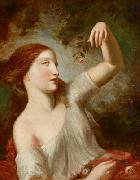 |
Charles-Joseph Natoire
|
|
(3 March 1700 - 23 August 1777) was a French painter in the Rococo manner, a pupil of François Lemoyne and director of the French Academy in Rome, 1751-1775. Considered during his lifetime the equal of François Boucher, he played a prominent role in the artistic life of France.
He is remembered above all for the series of the History of Psyche for Germain Boffrand's oval salon de la Princesse in the Hôtel de Soubise, Paris, and for the tapestry cartoons for the series of the History of Don Quixote, woven at the Beauvais tapestry manufacture, most of which are at the Château de Compiegne.
|
|
 |
Christoph Nathe
|
|
German, 1753-1806
|
|
 |
christopher r.w.nevinson
|
|
christopher r.w.nevinson(1889 to 1946)English painter. Son of H. W. Nevinson, the war correspondent and author, he studied painting at St John's Wood, London, in 1908, although his formative years as a student were spent at the Slade School of Art (1909-12) in London. He was influenced by Impressionism and Post-Impressionism, as well as Sandro Botticelli, as seen from an early Self-portrait (1911; London, Tate). The Futurist Exhibition of March 1912, held at the Sackville Gallery, London, proved decisive for his development. He met Gino Severini and returned with him to Paris where he encountered Umberto Boccioni, Ardengo Soffici, Guillaume Apollinaire and Amedeo Modigliani. He continued his studies at the Acad?mie Julian and the Cercle Russe in Paris, announcing his affiliation with Futurism by exhibiting a painting called Rising City (1912; lost) in the Friday Club exhibition of January 1913. Its title was a homage to Boccioni's painting, City Rises (1910; New York, MOMA), which had been shown at the Futurist Exhibition.
|
|
 |
Constantijn Netscher
|
|
painted Portrait de la princesse Palatine in 1700
|
|
 |
Cornelis Norbertus Gysbrechts
|
|
(ca 1630 - after 1683) was a Flemish painter of still life and trompe-l'œil active in the second half of the seventeenth century.
Gysbrechts was born in Antwerp, where, according to the RKD, he became a member of the Guild of St. Luke in 1660. He signed his name with "CND". His first known paintings date from 1659 in Antwerp. He painted in 1664 in Regensburg, from 1665-1668 in Hamburg and from 1668 to 1672 at the court in Copenhagen.
|
|
 |
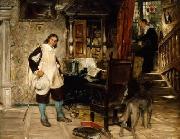
COYPEL, Noel Nicolas
|
|
French painter (b. 1690, Paris, d. 1734, Paris)
was a popular French artist. The son of Noël Coypel and half-brother to the more-famous painter Antoine Coypel, he was accredited to the Academie Royale in 1716. He was appointed a professorship in 1733
|
|
 |
David Dalhoff Neal
|
|
(October 20, 1838 - May 2, 1915), was an American artist.
David Dalhoff Neal was born to father Stephen Bryant Neal and mother Mary (Dalhoff) Neal, on Middlesex Street, in Lowell, Massachusetts. His grandparents were Stephen Neal, and David Dalhoff and Sally (Bean) Dalhoff of Canterbury, New Hampshire, Dolhoffs that emigrated from Russia in 1763, for whom he was named. His mother's family, the Beans, migrated from Holland in the early 1830s. His aunt Elizabeth Dolhoff was very artistic, and his uncle Jesse Dolhoff was a great singer.
He attended Lowell grammar schools, and high school at Lawrence, Massachusetts. Deciding to devote himself to the study of art, he then attended art classes at the recently opened Andover Academy in Andover, New Hampshire. When Neal was 14, his father died and his fortunes were "impaired", so he set sail for New Orleans. Here at the age of 15, he worked the docks as a wharf clerk with a wood shipping firm dealing in Brazilian and Honduran mahogany.
|
|
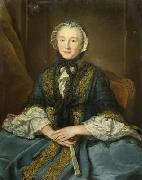 |
Donatien Nonotte
|
|
France (1708 -1785 ) - Painter
|
|
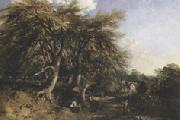 |
Edmund john niemann
|
|
1814-1901
|
|
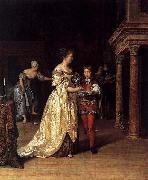 |
Eglon van der Neer
|
|
(1635/36, - May 3, 1703), was a Dutch painter of historical scenes, portraits and elegant, fashionable people, and later of landscapes.
Van der Neer was born in Amsterdam and was probably first taught by his father, Aert van der Neer, who married in Amsterdam in 1629, coming from Gorinchem. Eglon had a least five brothers and sisters, who were baptized in the Nieuwe Kerk between 1640 and 1650. He took lessons from Jacob van Loo, who was then one of the foremost figure painters in Amsterdam. Around 1654 Van der Neer, who probably had just finished his education with Van Loo, traveled to Orange, Vaucluse in the South of France and entered the service of Friedrich von Dohna (1621-1688), Governor of the Principality of Orange. Van der Neer stayed for three or four years in Orange and returned to Amsterdam by the end of 1658. There he married in February Maria Wagensvelt, the daughter of a wealthy Rotterdam notary. In 1663 Van der Neer and his family moved to Rotterdam, where Adriaen van der Werff became his student. He stayed in Rotterdam until his wife died in 1677. In 1679 he moved to The Hague and in 1680 he became a member of the Confrerie Pictura there. Later that year he moved again, taking up his residence at Brussels, where he married the miniature painter Marie Du Chastel in the following year. She bore him nine children.
|
|
 |
ekens, Joseph Francis
|
|
English, 1702-1748
|
|
 |
Elie Nadelman
|
|
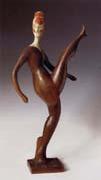
Polish-born American Abstract Sculptor, 1882-1946,was an American sculptor, draughtsman and collector of Polish birth. Nadelman studied briefly in Warsaw and then visited Munich in 1902 where he became interested in Classical antiquities at the Glytothek. He lived in Paris from 1904 to 1914, closely involved with the avant-guarde, exhibiting at the Societe des Artistes Independants and at the Salon d'Automne from 1905 to 1908. His first solo exhibition in 1909 at the Galerie Druet, Paris, revealed a large series of plaster and bronze classical female heads and full-length standing nudes and mannered Cubist drawings; the latter purchased by Leo Stein, who had brought Picasso to Nadelman's studio in 1908. For the most detailed and accurate studies of Nadelman's work from 1905-12, which was of crucial importance for early 20th c. modern sculpture, see Athena T. Spear in Bibliography. He moved to the United States (becoming an American citizen in 1927) during the outbreak of World War I, married Mrs. Viola Flannery, a wealthy heiress,and assembled a large, museum quality collection of folk sculpture.
|
|
 |
Emil Neumann
|
|
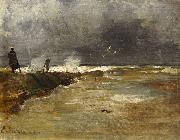
painted Strandspaziergang bei Wellengang in 1890
|
|
 |
Emil Nolde
|
|
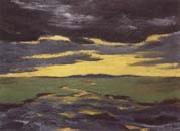
German Expressionist Painter, 1867-1956.German painter, watercolourist and printmaker. He was one of the strongest and most independent of the German Expressionists. Nolde belonged to the Dresden-based group known as DIE BR?CKE from 1906 to 1907. Primarily a colourist, he is best known for his paintings in oil, his watercolours and his graphic work. His art was deeply influenced by the stark natural beauty of his north German homeland, and alongside numerous landscapes, seascapes and flower paintings, Nolde also produced works with religious and imaginary subjects.
|
|
 |
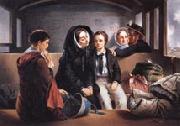
Ernest Bruce Nelson
|
|
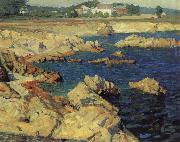
American,a native of Northern California and a graduate of Stanford University
1888-1952
|
|
 |
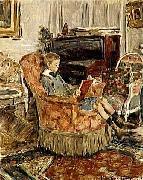
Erskine Nicol
|
|
British Genre Painter , (1825-1904)
was an Irish/Scottish painter. A student of William Allan, Nicol taught in Dublin, Ireland, from 1845-50, at the height of the Irish famine, and considered himself as much Irish as he was Scottish. Much of his work portrays the injustices inflicted upon the Irish population during the 19th century. He was made an Associate of the Royal Scottish Academy in 1855 and an Academician in 1859. Nicol exhibited at the Royal Academy and was made an Associate of the Royal Academy in 1866
|
|
 |
Etienne Moreau-Nelaton
|
|
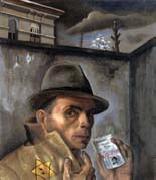
Adolphe Etienne Auguste Moreau-Nelaton (2 December 1859, Paris- 25 April 1927, Paris) was a French painter, art collector and art historian. His large collection is today held in its entirety by National French museums.
Moreau-Nelaton's family's art collecting began with his grandfather Adolphe Moreau (1800-59). As a stockbroker he possessed ample capital with which to buy the work of artists with whom he was personally acquainted, including Eugene Delacroix and Alexandre-Gabriel Decamps. Moreau-Nelaton's father, who was also named Adolphe Moureau (1827-82), was a high government official and led the railroad company Chemins de fer de l'Est. In 1856 he married the ceramic artist Camille Nelaton (1840-97), with whom he further expanded the family's collection.
|
|
 |
Felix Nussbaum
|
|
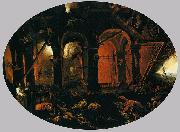
1904-44
Nussbaum was born in Osnabreck, Province of Hanover, as the son of Rahel and Phillip Nussbaum. Phillip was a World War I veteran and German patriot before the rise of the Nazis. He was an amateur painter when he was younger, but was forced to pursue other means of work for financial reasons. He therefore encouraged his son's artwork passionately. Nussbaum was a lifelong student, beginning his formal studies in 1920 in Hamburg and Berlin and continuing as long as the current political situation allowed him. In his earlier works, Felix was heavily influenced by Vincent Van Gogh and Henri Rousseau and he eventually pays homage to Giorgio de Chirico and Carlo Carre as well. Carl Hofer's expressionist paineng influenced Felix's careful approach color. In 1933, Nussbaum was studying on scholarship in Rome at the Berlin Academy of the Arts when the Nazis gained control of Germany.
|
|
 |
Filippo Napoletano
|
|
(c. 1587 - November 1629) was an Italian artist, with a peculiar output, mainly landscape and genre scenes and also drawings or etchings of diverse, often particular, items such as exotic soldiers, skeletons of animals, or cityscapes.
He began his career in his native city, Naples (1600-1613) and moved to Rome in 1614-1617), where he appears to have encountered and felt influenced by the successful Flemish landscape painters such as Paul Bril, Goffredo Wals, and Adam Elsheimer.
In 1617 Cosimo II dee Medici summoned him to Florence, where he worked closely with Jacques Callot. From notebooks, Filippo is known to have made hundreds of sketches of Tuscan landscapes and towns.
Starting in 1620 he reproduced in etchings part of his collection of animal skeletons owned by Johann Faber, a Bavarian physician-naturalist residing in Rome and a member of the scientific Accademia dei Lincei. In 1622, Napoletano published twelve etchings of caprices (capprici) and military uniforms (which he signed as signed Teodor Filippo de Liagno).
He is described by Giovanni Baglione as possessing a collection, a Wunderkammer of bellissime bizzarrie ("beautiful bizarre objects"), including among the objects exotic weaponry; fossilized plants; tiger, lion, and turtle skulls; oriental porcelain and sculpted crockery; a vest made of human skin; a harness for dragging whales on ice; a three-legged flea, Persian uniforms, and antiquities such as Roman coins, bronze lamps, and a few statuettes. After Napoletano death at Rome in 1628, bidding for such material was made by collectors such as Cardinal Ippolito Aldobrandini (future Clement VIII) and Cassiano dal Pozzo.
|
|
|
|
|
|
|
|
|
| Wholesale China Oil Painting Wholesale Oil Painting China Xiamen Portrait Reproduction on canvas Chinese Oil Painting Wholesale USA Oil Painting |
|
|
|
|


