|

|
|
| |
|
China Oil Painting Direct
|
|
100% hand painted, 100%
cotton canvas,
100% money back if not satisfaction.
|
|
|
|
ART WORKS
INDEX
A B C D E F G H I J K L M N O P Q R S T U V W X Y Z
|
|
ARTISTS
INDEX
A B C D E F G H I J K L M N O P Q R S T U V W X Y Z
|
|
|
|
 |
Ernest Fries 
|
|
1801-1833
German
Ernest Fries Locations
|
|
 |
Francois Ferriere
|
|
1752-1839
Swiss
Francois Ferriere Location
|
|
 |
Giovanni Francesco Guercino
|
|
1591-1666
Italian
Giovanni Francesco Guercino Galleries
|
|
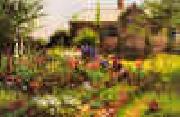 |
Abbott Fuller Graves
|
|
1859-1936
|
|
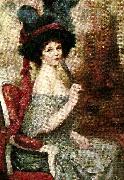 |
abel faivre
|
|
Il tudie trois ans l'École des beaux-arts de Lyon, puis a la Societe nationale et a l'Academie Julian de Paris aupres de Jules Lefebvre et Benjamin Constant.
Il a souvent expose a la societe des Artistes Francais et a ete medaille de 3e classe a l'Exposition de 1894. Medaille d'honneur a l'Exposition de Lyon, il aurait vecu et travaill?? a La Croix-Valmer (Var) ou un boulevard porte son nom.
Il est devenu celebre par ses affiches pour soutenir l'effort de guerre francais (1914-1918). Il a egalement travaille pour le journal humoristique Le Rire et pour Le Figaro. Ses caricatures sont visibles au Musee Jean Jaures a Castres.
À titre indicatif, un exemplaire original de son affiche Sports d'Hiver, Chamonix datant de 1905 etait estime a 6000 £ par une celebre salle de ventes en 2002. Une huile sur toile La Belle Odalisque (89x61 cm) se vendit 8 000 euros en 2006.
|
|
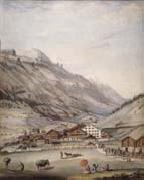 |
Abraham Fischer
|
|
1850 ?C 1913,was the sole Prime Minister of the Orange River Colony in South Africa. He was originally a lawyer in Cape Colony, joining the bar in 1875. He became vice-president of the Orange Free State's volksraad in 1893 and a member of the executive council in 1896. During the Boer War he went to Europe to solicit support for the Boers, returning in 1903 to practice law in the newly-formed Orange River Colony. Continuing to promote the Boer cause, he helped form the Oranje Unie party in May 1906 and became its chairman; the party won the majority of seats in the colony's first elections that were held in November 1907. On November 27, he was chosen as Prime Minister, and stayed in that position until it ceased to exist with the union of May 31, 1910. He then joined the cabinet of the Union of South Africa.
|
|
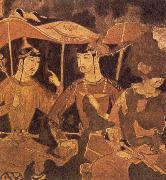 |
Abu l Faraj al Isfahani
|
|
Tenth century
|
|
 |
Adam Frans van der Meulen
|
|
painted Louis XIV before Strasbourg in 1682
|
|
 |
Adolf Fenyes
|
|
1867-1945
Adolf Fenyes Locations
|
|
 |
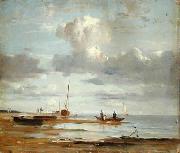
Adolf Friedrich Erdmann Menzel
|
|
1815-1905
Realism
German
|
|
 |
Adolph Friedrich Vollmer
|
|
(17 December 1806 - 12 February 1875) was a German landscape and marine painter and graphic artist. He and his contemporary, the painter Christian Morgenstern, were pioneers in Hamburg of early Realism in painting.
As son of a bookkeeper to a Hamburg merchant, Vollmer grew up in humble circumstances.[3] Determined to become a painter against the wishes of his father,[4] he became an apprentice to the brothers Suhr who owned a graphic workshop producing panorama prints. For one and a half years Vollmer travelled throughout Germany with one of the brothers, Cornelius Suhr, as had been Morgenstern before him. In 1826 he was introduced by the Hamburg art-dealer Ernst Harzen to the wealthy aristocrat and supporter of the arts, Carl Friedrich von Rumohr, who was patron to many young Hamburg artists among them Morgenstern and Otto Speckter. Probably on Rumohr advice Vollmer completed his studies under Christoffer Wilhelm Eckersberg at the Royal Danish Academy of Fine Arts in Copenhagen. He then moved to Munich from where he undertook journeys to Lake Konstanz, to the Austrian and Swiss Alps, to Venice, to Le Havre and to the Netherlands.
In 1839 Vollmer returned to Hamburg and settled there. One of his sons, Johannes Vollmer, became a prominent architect of protestant churches; a grand-son was the art historian and encyclopaedist Hans Vollmer who, for many years, edited the Thieme-Becker Kenstler Lexikon.
Vollmer became blind in 1866.
|
|
 |
Adriaen Frans Boudewijns
|
|
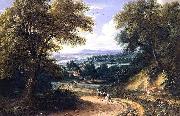
Adriaan Frans Boudewyns, not Anton Frans (Bauduins, or Baudouin), (3 October 1644 - 3 December 1719) was a Flemish Baroque landscape painter.
He was born at Brussels and learned to paint under a landscape painter named Ignatius van der Stock, and was received into the Guild there in 1665. He then travelled to Paris in 1666 and studied under A. F. van der Meulen for three years, and whose daughter Barbara he married 12 January 1670. In 1674 his wife died and in 1681 he moved back to Brussels where he married again. According to Houbraken he was a good landscape painter who encourage Gerard Hoet to stay in Brussels for 8 months in the 1680s. His son Frans Boudewijns (1682-1767) also became a successful painter. He was ruined in the bombardment of Brussels in 1695.
Adriaen Fransz. Boudewijns, Adriaen Frans Boudewyns, Adriaen Frans Baudewijns, Adriaen Frans Baudewyns, Anton Frans Baudouin, Adriaen Frans Bauduins, Adrien François Bauduins, Monogrammist AFB
|
|
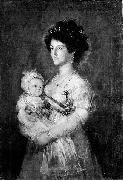 |
After Francisco de Goya
|
|
Francisco Jose de Goya y Lucientes (30 March 1746 - 16 April 1828) was a Spanish romantic painter and printmaker regarded both as the last of the Old Masters and the first of the moderns. Goya was a court painter to the Spanish Crown, and through his works was both a commentator on and chronicler of his era. The subversive and imaginative element in his art, as well as his bold handling of paint, provided a model for the work of later generations of artists, notably Manet, Picasso and Francis Bacon.
|
|
 |
Akfred Diwning Fripp,RWS
|
|
1822-1895
|
|
 |
Albani Francesco
|
|
Italian, 1578-1660
Italian painter and draughtsman. He was a distinguished artist of the Bolognese school, deeply influenced by Annibale Carracci's classicism, who worked in Rome as well as Bologna, painting altarpieces, frescoes and and cabinet pictures. His fame rests on his idyllic landscapes and small mythological pictures,
|
|
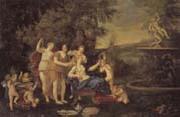 |
Albani Francesco
|
|
Italian Baroque Era Painter, 1578-1660
Italian painter and draughtsman. He was a distinguished artist of the Bolognese school, deeply influenced by Annibale Carracci's classicism, who worked in Rome as well as Bologna, painting altarpieces, frescoes and and cabinet pictures. His fame rests on his idyllic landscapes and small mythological pictures,
|
|
 |
Albani, Francesco
|
|
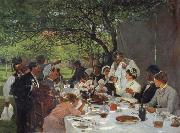
Italian Baroque Era Painter, 1578-1660 Albani's students included Pier Francesco Mola and Andrea Sacchi. Italian painter and draughtsman. He was a distinguished artist of the Bolognese school, deeply influenced by Annibale Carracci's classicism, who worked in Rome as well as Bologna, painting altarpieces, frescoes and and cabinet pictures. His fame rests on his idyllic landscapes and small mythological pictures,
|
|
 |
Albert Auguste Fourie
|
|
French, 1854-1896
|
|
 |
Albert Fitch Bellows
|
|
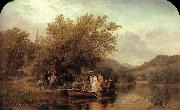
Nov.29.1829-Nov.24.1883, American landscape painter of the Hudson River School, was born at Milford, Massachusetts. He first studied architecture and opened his own architectural firm in 1849, but quickly turned to painting. From 1850 to 1856 he taught at the New England School of Design in Boston. He resigned his post to travel and study abroad, and spent time in Paris and at the Royal Academy at Antwerp as well as in England. He exhibited his first work at the National Academy of Design in 1857, becoming a full member in 1861, and he settled in New York City in 1858 on his return to America. Bellows spent most of his remaining career in New York, though he briefly moved to Boston. He visited Europe again in 1867. In New York he kept a studio in the same building as many of the notable Hudson River School artists of the time. His landscape work of the 1860s is fully in the late Hudson River School tradition, though Bellows depicted people more prominently in his landscapes than most other artists. He excelled at figurative scenes. Bellows also differed from most Hudson River School artists in that he became skilled at watercolor, and authored a respected book on the subject titled "Water-Color Painting: Some Facts and Authorities in Relation to Its Durability". He eventually maintained two studios, one for oil paintings and one for watercolor. He was a member of the American Watercolor Society, and an honorary member of the Royal Belgian Society of Water-Colorists. Bellows also mastered etching??along with Samuel Colman he was possibly the only other Hudson River School artist to do so??and became a member of the New York Etching Club, the Philadelphia Society of Etchers and the Royal Society of Painter-Etchers and Engravers in London, England, an esteemed professional organization whose members included James McNeil Whistler and Francis Seymour Haden. He died in Auburndale,
|
|
 |
Albert Henry Fullwood
|
|
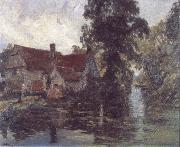
British, 1864-1930
|
|
 |
ALBOTTO Francesco
|
|
1721-1753
|
|
 |
Alejo Fernandez
|
|
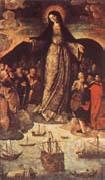
1475-1545 High Renaissance,Spanish,was a Spanish painter of the sixteenth century best known for his portrait of Christopher Columbus painted between 1505 and 1536. Fernandez arrived in Seville from Cordoba in 1508. He died in Seville around 1545.
|
|
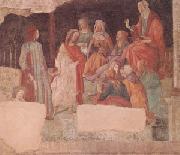 |
Alessandro Filipepe called botticelli
|
|
Florence ca 1445-1510
|
|
 |
Alexandre-Evariste Fragonard
|
|
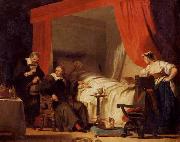
French Painter, 1780-1850,son of Jean-Honore Fragonard, was a French painter and sculptor in the troubadour style. He received his first training from his father and drew from him his piquant subjects and great facility, perfecting them under David.
|
|
|
|
Alexandre-Francois Caminade
|
|
Alexandre-Francois Caminade (December 14, 1783 - May 1862) was a French painter.
Caminade was born and died in Paris. He was a portraitist and a religious painter. He was Jacques Louis David's pupil. See also, Larousse article at Cyclopedia of Painters and Paintings, eds. John Desnison Champlin and Charles Callahan Perkins
|
|
 |
Alvan Fisher
|
|
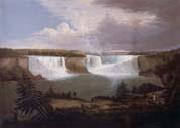
American Painter, 1792-1863, American painter. Soon after he left the tutelage of John Ritto Penniman (c. 1782-1841), he began to paint genre landscapes such as Winter in Milton, Massachusetts (1815; Montclair, NJ, A. Mus.), which depicts a man on a horse-drawn sleigh enjoying the beauty of a fresh New England snowfall.
|
|
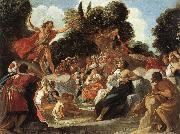 |
Anastagio Fontebuoni
|
|
Firenze 1571 -1626
|
|
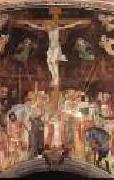 |
ANDREA DA FIRENZE
|
|
Italian Gothic Era Painter, ca.1343-1377
|
|
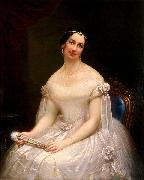 |
Anelli, Francesco
|
|
painted Julia Gardiner Tyler in 1846 - 1848
|
|
 |
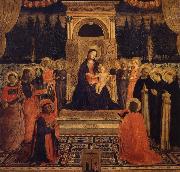
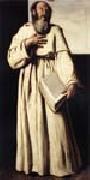
ANGELICO Fra
|
|
Italian Early Renaissance Painter, ca.1387-1455
Italian painter, illuminator and Dominican friar. He rose from obscure beginnings as a journeyman illuminator to the renown of an artist whose last major commissions were monumental fresco cycles in St Peter's and the Vatican Palace, Rome. He reached maturity in the early 1430s, a watershed in the history of Florentine art. None of the masters who had broken new ground with naturalistic painting in the 1420s was still in Florence by the end of that decade. The way was open for a new generation of painters, and Fra Angelico was the dominant figure among several who became prominent at that time, including Paolo Uccello, Fra Filippo Lippi and Andrea del Castagno. By the early 1430s Fra Angelico was operating the largest and most prestigious workshop in Florence. His paintings offered alternatives to the traditional polyptych altarpiece type and projected the new naturalism of panel painting on to a monumental scale. In fresco projects of the 1440s and 1450s, both for S Marco in Florence and for S Peter's and the Vatican Palace in Rome, Fra Angelico softened the typically astringent and declamatory style of Tuscan mural decoration with the colouristic and luminescent nuances that characterize his panel paintings. His legacy passed directly to the second half of the 15th century through the work of his close follower Benozzo Gozzoli and indirectly through the production of Domenico Veneziano and Piero della Francesca. Fra Angelico was undoubtedly the leading master in Rome at mid-century, and had the survival rate of 15th-century Roman painting been greater, his significance for such later artists as Melozzo da Forli and Antoniazzo Romano might be clearer than it is.
|
|
 |
Angelico Fra
|
|
Italian painter, illuminator and Dominican friar. He rose from obscure beginnings as a journeyman illuminator to the renown of an artist whose last major commissions were monumental fresco cycles in St Peter and the Vatican Palace, Rome. He reached maturity in the early 1430s, a watershed in the history of Florentine art. None of the masters who had broken new ground with naturalistic painting in the 1420s was still in Florence by the end of that decade. The way was open for a new generation of painters, and Fra Angelico was the dominant figure among several who became prominent at that time, including Paolo Uccello, Fra Filippo Lippi and Andrea del Castagno. By the early 1430s Fra Angelico was operating the largest and most prestigious workshop in Florence. His paintings offered alternatives to the traditional polyptych altarpiece type and projected the new naturalism of panel painting on to a monumental scale. In fresco projects of the 1440s and 1450s, both for S Marco in Florence and for S Peter's and the Vatican Palace in Rome, Fra Angelico softened the typically astringent and declamatory style of Tuscan mural decoration with the colouristic and luminescent nuances that characterize his panel paintings. His legacy passed directly to the second half of the 15th century through the work of his close follower Benozzo Gozzoli and indirectly through the production of Domenico Veneziano and Piero della Francesca. Fra Angelico was undoubtedly the leading master in Rome at mid-century, and had the survival rate of 15th-century Roman painting been greater, his significance for such later artists as Melozzo da Forli and Antoniazzo Romano might be clearer than it is.
|
|
 |
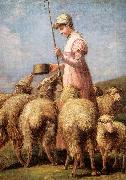
Aniello Falcone
|
|
(1600-1665) was an Italian Baroque painter, active in Naples and noted for his painted depictions of battle scenes.
Born in Naples the son of a tradesman, he showed his artistic tendency at an early age. He first received some instruction from a relative, and then became one of the most prominent pupils apprenticed under Jose de Ribera. Salvatore Rosa, in turn, is said to have apprenticed under Aniello.
The Anchorite, ca. 1650 Wikimedia Commons has media related to: Aniello Falcone
Besides battle pictures, large and small, taken from biblical as well as secular history, he painted various religious subjects, which, however, count for little in his general reputation. He became, as a battle painter, almost as celebrated as Giacomo Borgognone, and was named L' Oracolo delle Battaglie. His works have animation, variety, truth to nature, and careful color.
Falcone was bold, generous, accustomed to arms, and an excellent fencer. In the insurrection of 1647, led by Masaniello, he resolved to be bloodily avenged for the death, at the hands of two Spaniards, of a nephew and of a pupil in the school of art which he had established in Naples. Salvator Rosa, Carlo Coppola, among others, and he formed an armed band named the Compagnia della Morte, or Company of Death. (See Salvator Rosa.) They battled in the streets by day; at night they were painters again, and handled the brush with impetuous zeal.
Rule restored, they decamped. Falcone and Rosa made off to Rome; here Borgognone noticed the works of Falcone, and became his friend, and a French gentleman induced him to go to France, where Louis XIV became one of his patrons. Ultimately Jean-Baptiste Colbert obtained permission for the painter to return to Naples, and there he died in 1665.
|
|
 |
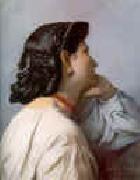
Anna Chamberlain Freeland
|
|
1837-1911
|
|
 |
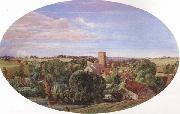
Anselm Feuerbach
|
|
1829-1880
German
Anselm Feuerbach Location
German painter. He studied in Germany, Paris, and Rome, spending much of his life in Italy. He sought to produce works of pure classicism that were both didactic and idealistic. Most of his famous works belong to his Roman period (1856?C73), including Battle of the Amazons (Nuremberg), Iphigenia (Stuttgart), and Medea (Munich). His portraits have withstood critical opinion better than his history paintings. His autobiography (1882) emphasizes his misunderstood genius.
|
|
 |
Anthony Frederick Augustus Sandys
|
|
1829-1904
English painter, illustrator and draughtsman. He was the son of Anthony Sands (1804-83), a minor local artist. He began his artistic education with his father and attended the Norwich School of Design from 1846. His precocious talent was recognized by the award of silver medals by the Society of Arts in 1846 and 1847. He moved to London in 1851, when he first exhibited at the Royal Academy, but he continued to spend time at Norwich until the death of his parents in 1883. After publishing in 1857 A Nightmare, a gentle caricature of John Ruskin and his Pre-Raphaelite prot?g?s William Holman Hunt, John Everett Millais and Dante Gabriel Rossetti and based on Millais's Sir Isumbras at the Ford (Port Sunlight, Lady Lever A.G.), he met Rossetti and became a member of his circle.
|
|
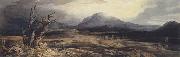 |
Anthony Vandyck Copley Fielding
|
|
English
1787-1855
|
|
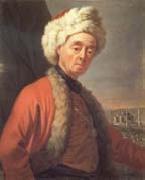 |
Antoine de Favray
|
|
French, 1706-died circa 1791,French painter. He is not documented until 1738, when he was mentioned as a private pupil of Jean-Fran?ois de Troy (ii), who was then director of the Acad?mie de France in Rome; in 1739 he became an official student at the Acad?mie. Among his student works is a copy (untraced) of Raphael's Fire in the Borgo (Rome, Vatican, Stanza dell'Incendio), which was mentioned by Charles de Brosses and exhibited in Paris in 1741. In 1744, for reasons that are not clear, he left Rome for Malta, remaining there for much of the rest of his career and devoting himself primarily to portraiture and genre painting. His ambition as a history painter, however, was fulfilled to a certain extent as a result of the patronage of two Grand Masters of the Order of the Knights of Malta, Manoel Pinto da Fonseca and Emmanuel de Rohan. His first dated picture executed in Malta is a Portrait of a Maltese Lady (1745; Paris, Louvre).
|
|
 |
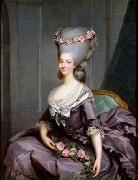
Antoine Leon Morel-Fatio
|
|
French, 1810-1871
|
|
 |
Antoine-Francois Callet
|
|
(1741-1823, Paris), generally known as Antoine Callet, was a French painter of portraits and allegorical works, who acted as official portraitist to Louis XVI.
He won the grand prix de Rome in 1764 with Cleobis et Biton conduisent le char de leur mere au temple de Junon (Kleobis and Biton dragging their mother's cart to the temple of Juno). He was accepted by the Academie des beaux arts in 1779, with his entry piece being a portrait of the comte d'Artois, and received with his allegory Le printemps (Spring) in 1781. He exhibited at the Salon from 1783 onwards. He painted the centre of the ceiling of the grande galerie of the palais du Luxembourg, with a composition entitled L'Aurore (Aurora). Under the French Consulate and the First French Empire he painted several more allegories, including an Allegorie du dix-huit brumaire ou la France sauvee (Allegory of 18 Brumaire, or France saved - 1801, château de Versailles) and an Allegorie de la bataille d'Austerlitz (Allegory of the Battle of Austerlitz - 1806, château de Versailles).
|
|
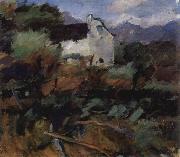 |
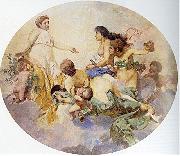
Anton Faistauer
|
|
painted Alte Muhle bei Maishofen in 1911
|
|
 |
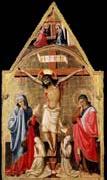
Antonio Cortina Farinos
|
|
February 16, 1841, Almassera, Valencia - November 6, 1890) was a Spanish artist.
|
|
 |
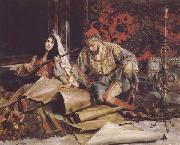
Antonio da Firenze
|
|
Italian Early Renaissance Painter, ca.1445-1510
|
|
 |
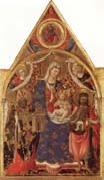
Antonio Fabres y Costa
|
|
1855-1938
|
|
 |
Antonio Fiorentino
|
|
Italian, 14th Century
|
|
 |
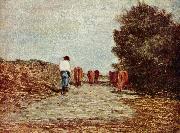
Antonio Firmino Monteiro
|
|
painted Matches in 1884
|
|
 |
Antonio Fontanesi
|
|
23 February 1818 - 17 April 1882) was an Italian painter who lived in Meiji period Japan between 1876 and 1878. He introduced European oil painting techniques to Japan, and exerted a significant role in the development of modern Japanese yega (Western style) painting. He is known for his works in the romantic style of the French Barbizon school.
Fontanesi was born in Reggio Emilia, Emilia-Romagna, and trained with the landscape painters Prospero Minghetti and Vincenzo Carnevali. From 1841 to 1846 he made theatre sets and began painting landscapes. In 1850, he moved to Geneva, where he stayed until 1865. His main area of interest was landscape painting, which he expanded on after visiting the 1855 Exposition Universelle in Paris. He participated in important artistic exhibitions, displaying his works in Lyon, Turin, Milan, Florence, Genoa and the Triennial Exhibition of Fine Art in Bologna. He was nominated professor at the Academy of Lucca, but moved to Turin when a chair as a landscape professor was created specially for him at the Accademia Albertina in Turin from 1869 to 1876.
|
|
 |
Antonio Maria Fabres y Costa
|
|
Spanish, 1854 - 1936
Antonio Fabres was a famous Spanish artist during the turn of the century. He was born in Barcelona Spain in 1854. It is said that he was the artist gene since his father was a draughtsman and his uncle a silversmith. He started studying at the Escuela de Bellas Artes in his native city at the age of 13. When he turned 21, he received a grant to study in Rome. There are records of his sculptures from early in his career but later on he became a painter almost exclusively. He joined Mariano Fortuny with a group that became known for their intense realism. Their popularity grew with the taste of the bourgeoisie seeking exotic images with oriental of medieval themes. He went back to Barcelona in 1886 and in 1894 he moved to Paris. The popularity he had earned during his decade in Italy helped him open a large studio where he could create complex scenes for the upper classes.
In 1902 the Academia de San Carlos decided to renovate their classical techniques with the ones of realism that were so popular in Europe at the time. Antonio Fabres was called to take the place of Santiago Rebull as head of this important institution. Although some of his students went on to become what was later known as the Post-Revolutionary Movement in Mexican art, the faculty had a hard time adapting to his distinct style and personality. In 1907, he returned to Rome. One of his last commissions in Mexico was the decorations of a hall at the Porfirio Diaz mansion where he mainly focused on art nouveau style .
Fabres was recognized most everywhere he traveled. He was acclaimed in Barcelona, London, Paris, Vienna and Lyon. At the end of his life he was dealt a very unfortunate blow when in 1926 he decided to donate a large amount of works to the Museo de Bellas Artes de Barcelona. In exchange for this generous donation he asked the Museum that a hall be built with his name, but the museum never built that hall and although he protested several times, they could never settle the argument. Antonio Fabres died in Rome in 1938.
|
|
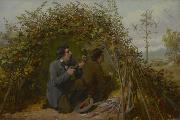 |
Arthur Fitzwilliam Tait
|
|
(February 5, 1819 -April 28, 1905) was an American artist who is known mostly for his paintings of wildlife. During most of his career, he was associated with the New York City art scene.
Tait was born in Lively Hall near Liverpool, England. At eight years old, because his father went bankrupt he was sent to live with relatives in Lancaster. It is during that time that he became attached to animals. Later on, in Manchester, England, Agnew & Zanetti Repository of Art acquired Arthur Tait who began self-learning to paint, as a twelve-year-old boy.
|
|
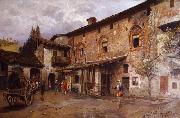 |
Arturo Ferrari
|
|
(Milan, 1861 - 1932) was an Italian painter.
Initiated into artistic studies by his father Cesare, an associate of Luigi Scrosati, and the painter Mose Bianchi from Lodi, Arturo Ferrari completed his training at the Brera Academy under the guidance of Giuseppe Bertini from 1877 to 1884 while working in the studio of Gerolamo Induno at the same time. He made his debut at the Esposizione di Belle Arti di Brera in 1879 with a view of the interior of Milan Cathedral, thus inaugurating the repertoire of Milanese perspective views that was to be a constant feature of his vast production of oil paintings and watercolours. He soon became the guiding spirit of a poetic and sentimental evocation of "Old Milan" during the phase of transition to the 20th century, when the face of the city changed radically through wholesale rebuilding. A regular participant in all the major exhibitions until 1932, the year of his death, he was the recipient of numerous marks of official recognition and enjoyed considerable success with the public as well as the esteem of conservative critics.
|
|
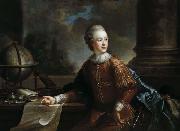 |
August Friedrich Oelenhainz
|
|
(June 28, 1745 - November 5, 1804) was a German painter.
|
|
|
|
|
|
|
|
|
| Wholesale China Oil Painting Wholesale Oil Painting China Xiamen Portrait Reproduction on canvas Chinese Oil Painting Wholesale USA Oil Painting |
|
|
|
|


