|

|
|
| |
|
China Oil Painting Direct
|
|
100% hand painted, 100%
cotton canvas,
100% money back if not satisfaction.
|
|
|
|
ART WORKS
INDEX
A B C D E F G H I J K L M N O P Q R S T U V W X Y Z
|
|
ARTISTS
INDEX
A B C D E F G H I J K L M N O P Q R S T U V W X Y Z
|
|
|
|
 |
Abanindranath Tagore 
|
|
Indian, 1871-1951,Painter and writer, brother of Gaganendranath Tagore. Intermittently taught by two undistinguished European academicians, Olinto Ghilardy and Charles Palmer, in 1897 he came under the influence of Ernest Binfield Havell (see HAVELL,), art scholar and catalyst of indigenism. Impressed by Mughal and Persian miniatures and the work of the Japanese artists Taikan Yokoyama and Shunso Hishida, who visited India in 1903, Abanindranath discarded Western realism for the stylized naturalism of Japanese art, which suited his poetic temperament, and the general John Ruskin-William Morris thought axis of such early indigenist theorists as Havell and Ananda Kentish Coomaraswamy. His work until the Omar Khayyam illustrations (1906-10; Santiniketan, Nandan Mus.), with their revivalist nationalism and fin-de-siecle affectations, greatly influenced the Neo-Bengal art movement formed chiefly by his pupils at the Calcutta Art School, where he was Vice-principal from 1905 to 1915. His own later work developed an imagist focus. The Arabian Nights series (1930; Calcutta, Babindra-Bharati Soc.), his magnum opus, in which literary and visual antecedents give the image a cultural ambience without intruding on its independence, marks the beginning of modern Indian narrative painting. His aesthetic theories, formulated in lectures he gave as the Vageswari Professor of Art at Calcutta University (1921-9), stressed the role of individual sensibility and imagination in creativity. Induced by his uncle Rabindranath,
|
|
 |
Abbot H Thayer
|
|
1849-1921
Abbot H Thayer Galleries
Abbott Handerson Thayer (August 12, 1849 ?C May 29, 1921) was an American artist, naturalist and teacher. As a painter of portraits, figures, animals and landscapes, he enjoyed a certain prominence during his lifetime, as shown by the fact that his paintings are in the most important U.S. art collections. In the last third of his life, he worked together with his son, Gerald Handerson Thayer, on a major book about protective coloration in nature, titled Concealing Coloration in the Animal Kingdom: An Exposition of the Laws of Disguise Through Color and Pattern; Being a Summary of Abbott H. Thayer??s Disclosures. First published by Macmillan in 1909, then reissued in 1918, it had a widespread impact on the use of military camouflage during World War I. He also influenced American art through his efforts as a teacher, taking on apprentices in his New Hampshire studio.
|
|
 |
Abbott Handerson Thayer
|
|
American Painter, 1849-1921
American painter and naturalist. He spent his youth in rural New England, where his earliest paintings were wildlife subjects, reflecting his interest in hunting and fishing. While in his teens Thayer achieved some success doing portraits of family pets, which he continued after a move to New York. He attended classes at the Brooklyn Art School and National Academy of Design, but in 1875 he settled in Paris, studying under Henri Lehmann and Jean-L?on G?r?me at the Ecole des Beaux-Arts. While abroad he produced landscapes in the Barbizon style and genre scenes, but on his return to New York in 1879
|
|
 |
Abraham van den Tempel
|
|
(1622?C1672) was a Dutch Golden Age painter.
He probably learned painting from his father, also a painter, but who died when he was still quite young, in 1636. That is the same year that he moved to Amsterdam, where he stayed until 1647, whereupon he moved to Leiden. According to Houbraken he was the son of a Mennonite preacher in Leeuwarden who was a respected art teacher. His father was Lambert Jacobsz (or Jacobszoon), who had taught Govert Flinck and Jacob Adriaensz Backer in their youth, both of whom were artists from Mennonite families. Abraham took the name Tempel because when he studied in Leiden, he lived in a house there with a relief of a Tempel in the keystone. He became a pupil of Jacob Backer, and studied mathematics at Leiden University. He met with great success with the Leiden city council, earning several generous commissions, including a series of three large allegorical paintings on the cloth industry of Leiden for the Cloth Hall which still hang in their original place today in the Stedelijk Museum De Lakenhal.
Sir William Davidson of Curriehill, Conservator of the Cloth Staple at Veere (with his son Charles), 1664.He became master of the Guild of St. Luke in 1657 and in 1659 he was chartermaster. In 1660 he returned to Amsterdam. His pupils were Frans van Mieris the Elder, Carel de Moor, Michiel van Musscher, Ary de Vois, and Isaac Paling
|
|
 |
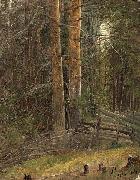
Addison T . Millar
|
|
American, 1860 - 1913
|
|
 |
Adolph Tidemand
|
|
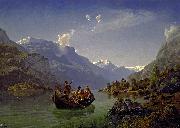
(1814-1876) was a noted Norwegian romantic nationalism painter. Among his best known paintings are Haugianerne (The Haugeans painted in 1852) and Brudeferd i Hardanger (The Bridal Procession in Hardanger painted in 1848) with Hans Gude.
Adolph Tidemand was born in Mandal, Norway as the son of customs inspector and Storting representative Christen Tidemand (1779-1838) and Johanne Henriette Henrikke Haste (1779-1859). He received private art lessons in his home town and his talent was soon recognized. He then was enrolled in an art school in Christiania, moving on to Copenhagen in the period 1832-37. Upon arrival in Copenhagen, he was rejected by the Royal Danish Academy of Fine Arts and studied at a private school of art, but by 1833 he was a pupil at the Academy, earning Academy exhibitions in 1835 and 1836. He studied there for five years and then began a journey to Italy to study further. But when Tidemand came to Desseldorf, Germany, he liked it so much that he settled down there.
From 1837-1841 he continued his studies with the art academy in Desseldorf, which at the time enjoyed widespread international recognition. He studied with and was influenced by his teacher, Theodor Hildebrandt.
|
|
 |
Adolph Tiedeman
|
|
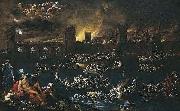
1814-1876
|
|
 |
Agostino Tassi
|
|
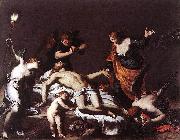
(1578--1644) was an Italian painter, mostly of landscapes and seascapes.
Because he aspired to nobility he modified the details of his early life. Though he was born in Perugia he claimed to have been born in Rome. His family name was Buonamici, but Agostino adopted the surname Tassi to give substance to his story that he was adopted by the Marchese Tassi. He was actually the son of a furrier named Domenico.
|
|
 |
Alessandro Turchi
|
|
(1578 - 22 January 1649) was an Italian painter of the early Baroque, born and active mainly in Verona, and moving late in life to Rome. He also went by the name Alessandro Veronese or the nickname L'Obetto.
Turchi initially trained with Felice Riccio (il Brusasorci) in Verona. By 1603, he is already working as independent painter, and in 1606-1609, Turchi paints the organ shutters for the Filarmonica Academy of Verona. When Brusasorci dies in 1605, Turchi and his fellow Paschal Ottino (or Pasquale) complete a series of their deceased master's canvases. In 1610, he completes an Assumption altarpiece for the church of San Luca of Verona In 1612, the Veronese Guild of the Goldsmiths commissions an altarpiece, today lost, of the Madonna and Saints. On leaving the school of Riccio, he went to Venice, where he worked for a time under Curio Cagliari.
|
|
 |
Alexander Theobald Van Laer
|
|
Alexander Theobald Van Laer (1857-1920) was an American painter, born at Auburn, New York.
He studied at the Art Students League of New York
|
|
 |
Alexey Tyranov
|
|
(Russian,1801 - 3 August 1859) was a Russian painter. Early in his career he painted icons with his brother; he then traveled to St. Petersburg to study at the Academy, where he took lessons with Alexey Venetsianov. From 1836 he was a pupil of Karl Bryullov. Tyranov chiefly painted portraits and genre scenes; he exhibited at a number of venues in the city throughout the 1830s and 40s.
|
|
 |
alexis de tocqueville
|
|
was born in Paris on July 29, 1805, of an aristocratic Norman family. He studied law in Paris (1823-1826) and then was appointed an assistant magistrate at Versailles (1827).
|
|
 |
Alfred Thompson Bricher
|
|
1837-1908
Alfred Thompson Bricher (born in Portsmouth, New Hampshire on April 10, 1837; died in Staten Island, New York on September 30, 1908) was a painter associated with White Mountain art and the Hudson River School.
He began as a businessman in Boston, Massachusetts before becoming a professional painter. He studied at the Lowell Institute when not working. He also studied with Albert Bierstadt, William Morris Hunt, and others In 1868 he moved to New York City and in the 1870s primarily did maritime themed paintings.
|
|
 |
Alfred Thorne
|
|
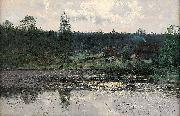
painted Insjolandskap med gard in 1886
|
|
 |
Alma-Tadema, Sir Lawrence
|
|
b.Jan. 8, 1836, Dronrijp, Netherlands.
d.June 25, 1912, Wiesbaden, Germany.
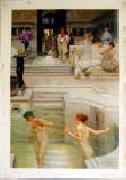
Painter and designer of Dutch birth. The son of a notary, Alma-Tadema demonstrated an early artistic ability. In 1852 he entered the Antwerp Academy, where he studied under Gustaf, Baron Wappers, and Nicaise de Keyser. An important influence at this time was Louis De Taye, Professor of Archaeology at the academy and a practising artist. Alma-Tadema lived and worked with De Taye from 1857 to 1859 and was encouraged by him to depict subjects from the early history of France and Belgium. This taste for historical themes increased when Alma-Tadema entered Baron Henri Leys studio in 1859 and began assisting him with his monumental frescoes for the Antwerp Town Hall. While in Leys studio, Alma-Tadema produced several major paintings, for example the Education of the Children of Clovis (1861; ex-Sir John Pender priv. col., see Zimmern, p. 3) and Venantius Fortunatus Reading his Poems to Radagonda (1862; Dordrecht, Dordrechts Mus.), which are characterized by their obscure Merovingian subject-matter, rather sombre colouring and close attention to detail.
|
|
 |
anders trulson
|
|
1874-1911
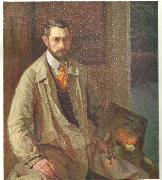
Anders Trulson, född 14 juli 1874 i Tosterup, död 23 augusti 1911 i Italien, var en svensk konstnär.
Anders Trulson föddes i Tosterup, där fadern var kusk på ett gods. Han fick sin utbildning i Köpenhamn och Stockholm, och blev enligt flera en dansksvensk blandning. Han bodde flera år i Lund innan hans utlandsresor började 1905, bland annat till Paris och Bregge. Trulson dog 1911 bara 37 år gammal på resa i Italien. 1902 var han med och grundade Skånska konstnärslaget som tillsammans med Konstföreningen för södra Sverige var centrum för det skånska konstlivet. Skånes konststil och liv var till stor del utanför övriga Sveriges, inte minst landskapsmåleriet vilket var präglat av ett eget färgspel.
|
|
 |
Ange Tissier
|
|
1814-1876
|
|
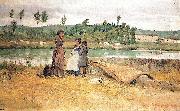 |
Angiolo Tommasi
|
|
painted On the river Arno in 1883-1885
|
|
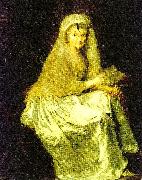 |
anna dorothea lisiewska therbusch
|
|
Lisiewski, Anna Dorothea (von) / Lisiewska-Therbusch, Anna Dorothea / Liszeswka, Anna Dorothea.
Anna Dorothea Therbusch (somtetimes Anna Dorothea Therbusch-Lisiewska, or Lisiervska/Lisziewska/Liesiewka (1721-1782) was a German painter.
|
|
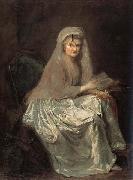 |
anna dorothea therbusch
|
|
1721-82
German painter of Polish descent. She was taught by her father, the portrait painter Georg Lisiewski (1674-1751), and received further training from Antoine Pesne in Paris. She worked for Charles-Eugene, Count of W?rttemberg, in Stuttgart from 1761 to 1762, and for Charles Theodore Wittelsbach, Elector Palatine of the Rhine, in Mannheim from 1763 to 1764. In 1765 she returned, via Stuttgart and Hohenzollern-Hechingen, to Paris, where in 1767 she became a member of the Academie Royale. She met Denis Diderot and Philipp Hackert, both of whom she painted, and Charles-Nicolas Cochin , but, despite consistent support from Prince Galitsyn, she was unable to establish herself in Paris. In 1769 she returned to Berlin where she received commissions for mythological paintings (e.g. Diana and her Nymphs, 1771; Potsdam, Neues Pal.) from Frederick II, King of Prussia. She painted portraits of members of the Prussian court, and the Berlin bourgeoisie, and in 1773 was commissioned by Catherine II, Empress of Russia, to paint a portrait of the Prussian royal family.
|
|
 |
anna maria thelott
|
|
Anna Maria Thelott, född 1683, död 1710, var en svensk konstnär. Thelott var en av de första självförsörjande och professionella kvinnliga konstnärerna i Skandinavien.
Anna Maria Thelott var dotter till instrumentmakaren och konstnären Philip Jacob Thelott d.ä., som ursprungligen kom från Schweiz, och syster till konstnären Philip Jacob Thelott d.y. Hon arbetade redan som barn sin med far och sina bröder i arbetet med att illustrera Olof Rudbeck d.ä.:s "Campus Elysii" och "Atlantica", och bidrog snart till hushållets försörjning genom att ensam utföra olika konstnärliga arbeten mot betalning, vilket gjorde henne till landets troligen första kvinnliga yrkeskonstnär.
Familjen bodde ursprungligen i Uppsala, men flyttade år 1702 till Stockholm efter den stora stadsbranden då en stor del av Uppsala brann ned.
Thelott var en mångsidig konstnär som var kunnig på en rad områden; hon utförde träsnitt och kopparstick förutom teckning och illustrationer med allegoriska och religiösa motiv, miniatyrer och bilder av djur och landskapsmålningar. Hon utförde elva träsnitt av tyska städer med tillhörande informativ text på uppdrag av Posttidningen år 1706 och anlitades för att illustrera Peringskiölds arbeten.
År 1710 dog Anna Maria Thelott i Stockholm som en av många offer för den sista pesten i Sverige. På Uppsala universitetsbibliotek finns en skissbok av henne utförd 1704-1709.
|
|
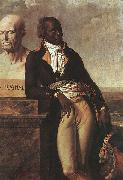 |
Anne-Louis Girodet de Roussy-Trioson
|
|
(also given as Anne-Louis Girodet de Roucy-Triosson, Anne-Louis Girodet-Trioson) January 5, 1767 - December 9, 1824), was a French painter and pupil of Jacques-Louis David, who was part of the beginning of the Romantic movement by adding elements of eroticism through his paintings. Girodet is remembered for his precise and clear style and for his paintings of members of the Napoleonic family.
|
|
 |
Anne-Louis Girodet-Trioson
|
|
1767-1824
French
Anne Louis Girodet Trioson Galleries
Girodet was born at Montargis. He lost his parents in early youth and the care of his inheritance and education fell to his guardian, M. Trioson, "medecin-de-mesdames," by whom he was in later life adopted and whose surname he took in 1812. He started in school by studying architecture and pursuing a military career. He later changed to the study of painting under a painter named Luquin, before entering the school of David. From 1789 to 1793 he lived in Italy where, at the age of twenty-two, he successfully competed for the Prix de Rome thus making a name for himself for his painting of the Story of Joseph and his Brethren. At Rome he painted his Hippocrate refusant les presents d'Artaxerxes and Endymion-dormant (presently held in the Louvre), work which was praised at the Salon of 1793.
|
|
 |
Anton Wilhelm Tischbein
|
|
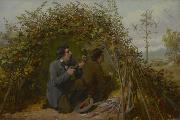
(1730 -1804 ) - Painter
|
|
 |
Arthur Fitzwilliam Tait
|
|
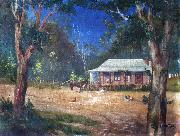
(February 5, 1819 -April 28, 1905) was an American artist who is known mostly for his paintings of wildlife. During most of his career, he was associated with the New York City art scene.
Tait was born in Lively Hall near Liverpool, England. At eight years old, because his father went bankrupt he was sent to live with relatives in Lancaster. It is during that time that he became attached to animals. Later on, in Manchester, England, Agnew & Zanetti Repository of Art acquired Arthur Tait who began self-learning to paint, as a twelve-year-old boy.
|
|
 |
Arthur Tozart
|
|
(1800 -1900 ) - Painter
|
|
 |
Artist Adolphe Joseph Thomas Monticelli
|
|
(October 14, 1824 - June 29, 1886) was a French painter of the generation preceding the Impressionists.
Monticelli was born in Marseille in humble circumstances. He attended the École Municipale de Dessin in Marseille from 1842 to 1846, and continued his artistic training in Paris, where he studied under Paul Delaroche at the École des Beaux-Arts. In Paris he made copies after the Old Masters in the Louvre, and admired the oil sketches of Eugene Delacroix. In 1855 he met Narcisse Diaz, a member of the Barbizon school, and the two often painted together in the Fontainebleau Forest. Monticelli frequently adopted Diaz's practice of introducing nudes or elegantly costumed figures into his landscapes.
He developed a highly individual Romantic style of painting, in which richly colored, dappled, textured and glazed surfaces produce a scintillating effect. He painted courtly subjects inspired by Antoine Watteau; he also painted still lives, portraits, and Orientalist subjects that owe much to the example of Delacroix.
After 1870, Monticelli returned to Marseille, where he would live in poverty despite a prolific output, selling his paintings for small sums. An unworldly man, he dedicated himself singlemindedly to his art.
The young Paul Cezanne had befriended Monticelli in the 1860s, and the influence of the older painter's work can be seen in Cezanne's work of that decade. Between 1878 and 1884 the two artists often painted landscapes together, once spending a month roaming the Aix countryside. Although Monticelli experimented briefly around 1870 with a treatment of light reflecting the discoveries of the Impressionists, he found the objectivity of this approach uncongenial.
Confronted with criticism of his style of painting Monticelli himself remarked, "I paint for thirty years from now". The work of this instinctive painter reached its greatest spontaneity in the decade before his death in 1886.
|
|
 |
Artur Timoteo da Costa
|
|
Brazilian
1882-1923
Artur Timoteo da Costa Gallery
|
|
 |
Attributed to henry pether
|
|
fl.1828-1865
|
|
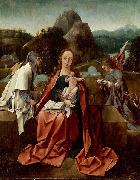 |
Attributed to Jan de Beer
|
|
painted Madonna and Child with a pilgrim and an angel in c. 1490-1515
|
|
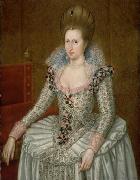 |
Attributed to John de Critz the Elder
|
|
painted Portrait of Anne of Denmark in c. 1605
|
|
 |
Attributed to john wilson carmichael
|
|
1800-1868
|
|
 |
Attributed to Wilkie
|
|
painted The Christmas Party 1850
|
|
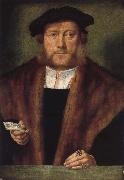 |
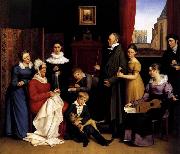
Barthel Bruyn the Elder
|
|
German Northern Renaissance Painter, 1493-1555
|
|
 |
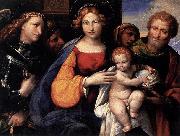
BEGAS, Carl the Elder
|
|
German painter
b. 1794, Hainsberg bei Aachen, d. 1854, Berlin
|
|
 |
Benvenuto Tisi
|
|
(1481 - September 6, 1559) was a Late-Renaissance-Mannerist Italian painter of the School of Ferrara. Garofalo's career began attached to the court of the Duke d'Este. His early works have been described as "idyllic", but they often conform to the elaborate conceits favored by the artistically refined Ferrarese court.
Born in Ferrara, Tisi is claimed to have apprenticed under Panetti and perhaps Costa and was a contemporary, and sometimes collaborator with Dosso Dossi. In 1495 he worked at Cremona under Boccaccino, who initiated him into Venetian colouring. He may have spent three years (1509 - 1512), in Rome. This led to a stylized classical style, more influenced by Giulio Romano.
Invited by a Ferrarese gentleman, Geronimo Sagrato, to Rome, he worked briefly under Raphael in the decoration of the Stanza della Segnatura. From Rome family affairs recalled him to Ferrara; there Duke Alfonso I commissioned him to execute paintings, along with the Dossi, in the Delizia di Belriguardo and in other palaces. Thus the style of Tisi partakes of the Lombard, the Roman and the Venetian modes.
He painted extensively in Ferrara, both in oil and in fresco, two of his principal works being the "Massacre of the Innocents" (1519), in the church of S. Francesco, and his masterpiece "Betrayal of Christ" (1524). For the former he made clay models for study and a clay figure. He continued constantly at work until in 1550 blindness overtook him, painting on all feast-days in monasteries for the love of God. He had married at the age forty-eight, and died at Ferrara on the 6th (or 16th) of September 1559, leaving two children.
Garofalo combined sacred inventions with some very familiar details. A certain archaism of style, with a strong glow of colour, suffices to distinguish from the true method of Raphael even those pictures in which he most closely resembles the great masterthis sometimes very closely; but the work of Garofalo is seldom free from a certain trim pettiness of feeling and manner.
|
|
 |
Bill Traylor
|
|
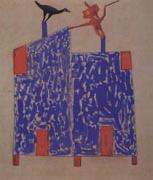
African-American Folk Artist, ca.1856-1949
was a self-taught artist born an Alabama slave. Unable to read or write, he first began drawing in 1939 at the age of eighty-three. He worked full-time for the next four years to produce over eighteen hundred drawings. He used a straight edge to create geometric silhouettes of human and animal figures which he then filled in with crayon and tempera. He is known for his intriguing use of pattern versus flat color and a remarkably intuitive sense of space. He started hanging his works on a nearby fence to entertain the locals. One of his first fans was Charles Shannon, a painter who introduced Traylor to the New South regionalist artists and organized two shows of his work before his death. Since then, Traylor has become one of the most highly sought-after outsider artists.
|
|
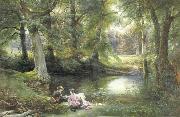 |
Carl Friedrich WilhelmTrautschold
|
|
1815-1877
|
|
 |
Carl Tragardh
|
|
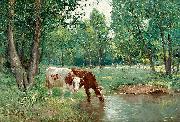
(20 September 1861 - 5 June 1899) was a Swedish painter.
Trägårdh studied at the Royal Swedish Academy of Arts in Stockholm 1881-1883, in Karlsruhe 1883-84, and Munich until 1885. He then moved to France where he became a resident until his death. He exhibited both in Sweden and in France. He received a couple of medals and found a patron in the French singer and art collector Jean-Baptiste Faure (1830 - 1914) who bought some 40 paintings by him. His production is often landscape with grazing cattle, usually cows or sheep.
|
|
 |
Charles - Theodore Frere
|
|
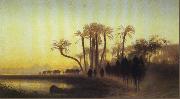
French, 1814 - 1888
|
|
 |
Charles Leslie Thrasher
|
|
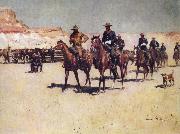
American Artist , 1889-1936
|
|
 |
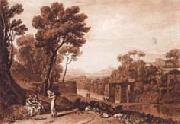
Charles Tournemine
|
|
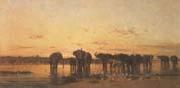
French
1812-1872
|
|
 |
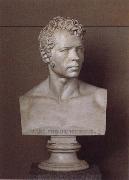
Charles Turner
|
|
English Painter, ca.1773-1857
|
|
 |
Christian Friedrich Tieck
|
|
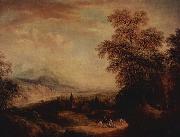
1776-1851 Berlin,was a German sculptor and a brother of Ludwig Tieck. Tieck was born in Berlin, where he also died. He was taught by Johann Gottfried Schadow. Based on a concept by Karl Friedrich Schinkel, Tieck created the tomb of General Gerhard von Scharnhorst at Berlin's Invalidenfriedhof in 1822. He also created a bust of Wilhelm Heinrich Wackenroder and a lion made of bronze after a model by Christian Daniel Rauch.
|
|
 |
Christian Georg Schutz the Elder
|
|
painted Gebirgslandschaft in 1773
|
|
 |
Circle of Mateo Cerezo the Younger
|
|
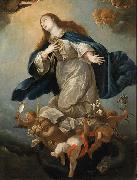
painted Immaculate Virgin, formerly in the Chapel of Palacio de Penaranda, Spain in 17th century
|
|
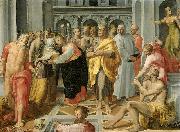 |
Circle of Pellegrino Tibaldi
|
|
painted The Meeting of Mary and Elizabeth in the Presence of St. Jerome, St. Joseph and Others in 1550 - 1600
|
|
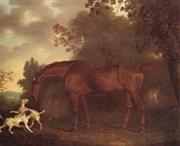 |
Clifton Tomson
|
|
British , 1775-1828
|
|
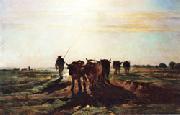 |
constant troyon
|
|
French Barbizon School Painter, 1810-1865 Troyon's students included Evariste-Vital Luminais. French painter. He was brought up among the Sevres ceramics workers and received his first lessons in drawing and painting from Denis-Desire Riocreux (1791-1872), a porcelain painter who was one of the founders of the Musee National de Ceramique. Troyon began his career as a painter at the Sevres factory while also studying landscape painting in his spare time.
|
|
 |
Cosimo Tura
|
|
1430-95
Italian Cosimo Tura Galleries
Cosimo Tura (c. 1430 ?C 1495), also known as Il Cosm?? or Cosme Tura, was an Italian early-Renaissance (or Quattrocento) painter and considered one of the founders of the School of Ferrara.
Born in Ferrara, he was a student of Francesco Squarcione of Padua. Later he obtained patronage from both Dukes Borso and Ercole I d'Este. By 1460, he was stipended by the Ferrarese Court. His pupils include Francesco del Cossa and Francesco Bianchi. He appears influenced by Mantegna's and Piero della Francesca's quattrocento styles.
In Ferrara, he is well represented by frescoes in the Palazzo Schifanoia (1469?C71) . This pleasure palace, with facade and architecture of little note, belonged to the d'Este family and is located just outside the medieval town walls. Cosimo, along with Francesco del Cossa, helped produce an intricately conceived allegorical series about the months of the year and zodiac symbols. The series contains contemporary portraits of musicians, laborers, and carnival floats in idyllic parades. As in Piero della Francesca's world, the unemotive figures mill in classical serenity.
He also painted the organ doors for the Duomo showing the Annunciation (1469). He collaborated in the painting of a series of "muses" for a studiolo of Leonello d'Este, including the allegorical figure of Calliope at the National Gallery (see image). While the individual attributions are often debated, among the artists thought to complete the Angelo di Pietro da Sienna, also called Maccagino or Angelo Parrasio, and Michele Pannonio.
|
|
|
|
|
|
|
|
|
| Wholesale China Oil Painting Wholesale Oil Painting China Xiamen Portrait Reproduction on canvas Chinese Oil Painting Wholesale USA Oil Painting |
|
|
|
|


