|

|
|
| |
|
China Oil Painting Direct
|
|
100% hand painted, 100%
cotton canvas,
100% money back if not satisfaction.
|
|
|
|
ART WORKS
INDEX
A B C D E F G H I J K L M N O P Q R S T U V W X Y Z
|
|
ARTISTS
INDEX
A B C D E F G H I J K L M N O P Q R S T U V W X Y Z
|
|
|
|
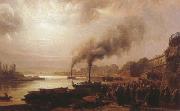 |
Christian Friedrich Gille 
|
|
1805-1899
German painter, engraver and lithographer. Between 1825 and 1833 he studied engraving under Johann Gottfried Abraham Frenzel, lithography under Louis Z?llner and painting under Johan Christian Dahl at the Hochschule f?r Bildende K?nste, Dresden. Dahl encouraged in Gille an appreciation for the natural formations and changing conditions of light that had inspired Dahl's friend and mentor, the Romantic painter Caspar David Friedrich. Gille, however, did not adopt Friedrich's tendency to find mystical significance in these phenomena. Gille's prints are highly descriptive in style and include Saxon landscapes, genre scenes, animal studies and portraits of celebrated men. His paintings and sketches, in oils, watercolour and pen and brown ink, were mostly of landscapes, many with animal staffage.
|
|
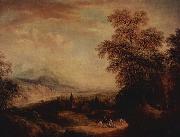 |
Christian Georg Schutz the Elder
|
|
painted Gebirgslandschaft in 1773
|
|
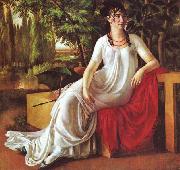 |
Christian Gottlieb Schick
|
|
painted Porträt Frau von Cotta in 1802
|
|
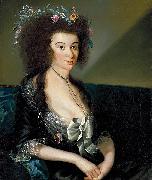 |
Christian Gullager
|
|
Christian Gullager (1759-1826) was an artist specializing in portraits and theatrical scenery in the late 18th century; he worked in Boston, Massachusetts, New York, and Philadelphia. Born in Copenhagen, he trained at the Royal Danish Academy of Fine Arts. In America, portrait subjects included president George Washington. He designed scenery for Boston's Federal Street Theatre.
|
|
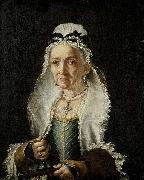 |
Circle of Fra Galgario
|
|
painted Portrait of an Old Lady in 1720 - 1750
|
|
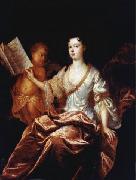 |
Circle of Pierre Gobert
|
|
1662-1744
|
|
 |
Clare George
|
|
British
1860-1900
|
|
 |
Clarence a gagnon
|
|
Canadian Painter, 1881-1942
was a Quebecois painter. A native of Montreal, he studied at the Art Association of Montreal in 1897. Early in life, his mother had encouraged him to learn drawing and painting, but his father wanted him to become a businessman. Desiring to improve his knowledge about art, he went to the Academie Julian, Paris, and studied under Jean-Paul Laurens from 1904 to 1905. He then lived in Baie-Saint-Paul, where he produced many paintings depicting nature and the Canadian people. He invented a new kind of winter landscape that consisted of mountains, valleys, sharp contrasts, vivid colours, and sinuous lines. He became a member of the Royal Academy of the Arts in 1910. Gagnon took a trip to Venice, Rouen, Saint-Malo and the Laurentians to paint landscapes. He illustrated the pages of the novel Maria Chapdelaine by Louis Hemon. As well, he was the illustrator for Louis-Frederic Rouquette in 1929 in the white silence. He lived in France from 1924 to 1936. Gagnon opened modernity painting within Canada. He died in 1942. One of his disciples is the painter Rene Richard.
|
|
 |
Claude Gillot
|
|
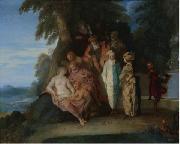
(April 28,1673 Langres - May 4,1722 Paris) was a French painter, best known as the master of Watteau and Lancret. He had Watteau as an apprentice between 1703 and 1708.
He was a painter, engraver, book illustrator, metal worker, and designer for the theater.
His sportive mythological landscape pieces, with such titles as Feast of Pan and Feast of Bacchus, opened the Academy of Painting at Paris to him in 1715; and he then adapted his art to the fashionable tastes of the day, and introduced the decorative fetes champetres, in which he was afterwards surpassed by his pupils. He was also closely connected with the opera and theatre as a designer of scenery and costumes.
|
|
 |
CONGNET, Gillis
|
|
Flemish painter (b. ca. 1538, Antwerpen, d. 1599, Hamburg)
Flemish painter. The son of a goldsmith of the same name, he trained as a painter with Lambert Wenselyns ( fl 1553) and possibly also with Antoon van Palermo (1503 or 1513-c. 1589), an Antwerp art dealer in whose house he lived (van Mander). In 1561 he became a free master in the Antwerp Guild of St Luke. Shortly afterwards he travelled to Italy, going first to Naples and Sicily and then to Terni, where he made frescoes with a painter named Stello. In 1568 he was registered as a member of the Accademia in Florence. He must have returned to Antwerp in 1570, for between that year and 1585 his name appears in the register of the city's Guild of St Luke, of which he became Dean in 1585. A year later, on the arrival of Alessandro Farnese,
|
|
 |
CONINXLOO, Gillis van
|
|
Flemish Northern Renaissance Painter, 1544-1607
Flemish landscape painter. His Judgment of Midas (Dresden), Latona (Hermitage, St. Petersburg), and above all the Landscape with Figures (Liechtenstein Gall., Vienna) are fine examples of his art. Coninxloo's paintings, characterized by fantasy, warm tones, and refined realism,
|
|
 |
Cornelis Norbertus Gysbrechts
|
|
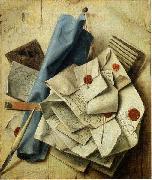
(ca 1630 - after 1683) was a Flemish painter of still life and trompe-l'œil active in the second half of the seventeenth century.
Gysbrechts was born in Antwerp, where, according to the RKD, he became a member of the Guild of St. Luke in 1660. He signed his name with "CND". His first known paintings date from 1659 in Antwerp. He painted in 1664 in Regensburg, from 1665-1668 in Hamburg and from 1668 to 1672 at the court in Copenhagen.
|
|
 |
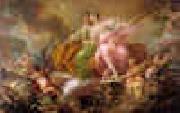
Cornelius Gijsbrechts
|
|
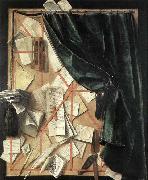
Flemish Baroque Era Painter, ca.1630-1675
|
|
 |
Corrado Giaquinto
|
|
1703-1766
Italian
Corrado Giaquinto Galleries
He was born in Molfetta. As a boy he apprenticed with a modest local painter Saverio Porta, (c1667-1725), escaping the religious career his parents had intended for him. By October 1724, he left Molfetta, and along with his contemporaries Francesco de Mura (1696-1784) and Giuseppe Bonito (1707-1789), he trained from 1719-23 in the prolific Neapolitan studio of Francesco Solimena, either with Solimena or his pupil, Nicola Maria Rossi. Throughout his life, Giaquinto was a peripatetic painter, with long sojourns in Naples, Rome (between 1723-53), Turin (1733 and 1735-9), and Madrid (1753-1761).
In 1723, he moved to Rome to work in the studio of Sebastiano Conca. He painted in San Lorenzo in Damaso, San Giovanni Calibita, and the ceiling at Santa Croce in Gerusalemme. In March 1727, with Giuseppe Rossi as an assistant, Giaquinto opened an independent studio near the Ponte Sisto, in the parish of Saint Giovanni of the Malva in Rome. In 1734, he married Caterina Silvestri Agate.
The first documented work by his hand is Christ crucified with the Madonna, Saint John Evangelist, and Magdalene commissioned in 1730 by king John V of Portugal for the cathedral of the Mafra. In 1731, he received a prestigious commission, to execute frescoes in the church of San Nicola dei Lorenesi: Saint Nicholas water gush from cliff, three theologic and cardinal Virtues, and in the cupola Paradise. The latest restoration confirms Giaquinto stylistic independence from Solimena, and reveals his stylistic dependence on Luca Giordano.
|
|
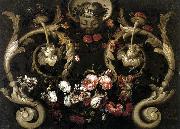 |
CORTE, Gabriel de la.
|
|
Spanish painter
b. 1648, Madrid, d. 1694, Madrid
|
|
 |
Courbet, Gustave
|
|
French Realist Painter, 1819-1877
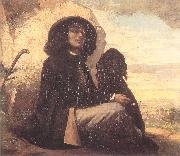
Gustave Courbet was born at Ornans on June 10, 1819. He appears to have inherited his vigorous temperament from his father, a landowner and prominent personality in the Franche-Comt region. At the age of 18 Gustave went to the College Royal at Besançon. There he openly expressed his dissatisfaction with the traditional classical subjects he was obliged to study, going so far as to lead a revolt among the students. In 1838 he was enrolled as an externe and could simultaneously attend the classes of Charles Flajoulot, director of the cole des Beaux-Arts. At the college in Besançon, Courbet became fast friends with Max Buchon, whose Essais Poetiques (1839) he illustrated with four lithographs. In 1840 Courbet went to Paris to study law, but he decided to become a painter and spent much time copying in the Louvre. In 1844 his Self-Portrait with Black Dog was exhibited at the Salon. The following year he submitted five pictures; only one, Le Guitarrero, was accepted. After a complete rejection in 1847, the Liberal Jury of 1848 accepted all 10 of his entries, and the critic Champfleury, who was to become Courbet's first staunch apologist, highly praised the Walpurgis Night. Courbet achieved artistic maturity with After Dinner at Ornans, which was shown at the Salon of 1849. By 1850 the last traces of sentimentality disappeared from his work as he strove to achieve an honest imagery of the lives of simple people, but the monumentality of the concept in conjunction with the rustic subject matter proved to be widely unacceptable. At this time the notion of Courbet's "vulgarity" became current as the press began to lampoon his pictures and criticize his penchant for the ugly. His nine entries in the Salon of 1850 included the Portrait of Berlioz, the Man with the Pipe, the Return from the Fair, the Stone Breakers, and, largest of all, the Burial at Ornans, which contains over 40 life-size figures whose rugged features and static poses are reinforced by the somber landscape. A decade later Courbet wrote: "The basis of realism is the negation of the ideal. Burial at Ornans was in reality the burial of romanticism." In 1851 the Second Empire was officially proclaimed, and during the next 20 years Courbet remained an uncompromising opponent of Emperor Napoleon III. At the Salon of 1853, where the painter exhibited three works, the Emperor pronounced one of them, The Bathers, obscene; nevertheless, it was purchased by a Montpellier innkeeper, Alfred Bruyas, who became the artist's patron and host. While visiting Bruyas in 1854 Courbet painted his first seascapes. Among them is the Seashore at Palavas, in which the artist is seen waving his hat at the great expanse of water. In a letter to Jules Vall's written in this period Courbet remarked: "Oh sea! Your voice is tremendous, but it will never succeed in drowning out the voice of Fame shouting my name to the entire world." Courbet was handsome and flamboyant, naively boastful, and aware of his own worth. His extraordinary selfconfidence is also evident in another painting of 1854, The Meeting, in which Courbet, stick in hand, approaches Bruyas and his servant, who welcome him with reverential attitudes. It has recently been shown that the picture bears a relationship to the theme of the Wandering Jew as it was commonly represented in the naive imagery of the popular Épinal prints. Of the 14 paintings Courbet submitted to the Paris World Exhibition of 1855, 3 major ones were rejected. In retaliation, he showed 40 of his pictures at a private pavilion he erected opposite the official one. In the preface to his catalog Courbet expressed his intention "to be able to represent the customs, the ideas, the appearance of my own era according to my own valuation; to be not only a painter but a man as well; in short, to create living art." One of the rejected works was the enormous painting The Studio, the full title of which was Real Allegory, Representing a Phase of Seven Years of My Life as a Painter. The work is charged with a symbolism which, in spite of obvious elements, remains obscure. At the center, between the two worlds expressed by the inhabitants of the left and right sides of the picture, is Courbet painting a landscape while a nude looks over his shoulder and a child admires his work. Champfleury found the notion of a "real allegory" ridiculous and concluded that Courbet had lost the conviction and simplicity of the earlier works. Young Ladies by the Seine (1856) only served to further convince the critic of Courbet's diminished powers. But if Courbet had begun to disappoint the members of the old realist circle, his popular reputation, particularly outside France, was growing. He visited Frankfurt in 1858-1859, where he took part in elaborate hunting parties and painted a number of scenes based on direct observation. His Stag Drinking was exhibited in Besançon, where Courbet won a medal, and in 1861 his work, as well as a lecture on his artistic principles, met with great success in Antwerp. With the support of the critic Jules Castagnary, Courbet opened a school where students dissatisfied with the training at the cole des Beaux-Arts could hear him extol the virtues of independence from authority and dedication to nature.
|
|
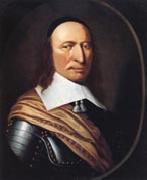 |
Couturier Henri
|
|
Active probably Leyden,mid-17th century
|
|
 |
CRAYER, Gaspard de
|
|
Flemish painter (b. 1584, Antwerpen, d. 1669, Ghent)
|
|
 |
CRESPI, Giovanni Battista
|
|
Italian Baroque Era/Mannerist Painter, ca.1575-1633
|
|
 |
CRESPI, Giuseppe Maria
|
|
Italian Baroque Era Painter, 1665-1747
Painter, draughtsman and printmaker. His religious and mythological works are distinguished by a free brushstroke and a painterly manner. He also painted spirited genre scenes, which by their quality, content and quantity distinguish him as one of the first Italian painters of high standing to devote serious attention to the depiction of contemporary life. Such paintings as Woman Laundering (1700-05; St Petersburg, Hermitage) or Woman Washing Dishes (1720-25; Florence, Uffizi) offer straightforward glimpses of domestic chores in images that are startlingly novel for the period and look forward to the art of Jean-Simeon Chardin, Jean-Francois Millet and Honore Daumier.
|
|
 |
Cristofano Gherardi
|
|
(November 25, 1508 - April 1556) was an Italian painter of the late-Renaissance or Mannerist period, active mainly in Florence and Tuscany.
He was born in Borgo San Sepolcro and also called il Doceno dal Borgo. He was the pupil of the painter Raffaellino del Colle, in whose shop he encountered Rosso Fiorentino and Giorgio Vasari. He painted under Vasari's direction, the one assistant of Vasari's whom Sidney J. Freedberg singles out.
In 1536 Vasari invited him to Florence to assist in producing the decorations for the ceremonial entry of Charles V into Florence. The following year, in the reaction after Duke Alessandro's death, Gherardi was among those banished from Florence, so his work for Vasari was confined to projects outside Florence, until his banishment was lifted in 1554 and he was permitted to return . In the long interval he had painted the Visitation of Mary to Elizabeth for the church of San Domenico in Citte di Castello, church decorations in San Sepolcro, and works for the Vitelli, who were long-term patrons. Gherardi, in the two years left to him, assisted Vasari in the Quartiere degli Elementi in Palazzo Vecchio. Vasari's main assistant after Gherardi's demise was Jan van der Straat, called Giovanni Stradano.
|
|
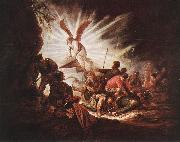 |
CUYP, Benjamin Gerritsz.
|
|
b. 1612, Dordrecht, d. 1652, Dordrecht
Dordrecht,,Painter, half-brother of Jacob Cuyp. Houbraken stated that he studied with his half-brother Jacob. Benjamin entered the Guild of St Luke on 27 January 1631, at the same time as his brother Gerrit Gerritsz. the younger. In 1641 Benjamin gave evidence in a medical affair, which has prompted speculation that he may have trained as a doctor, but in 1643 he is twice recorded in The Hague as a painter, living with other artists.
|
|
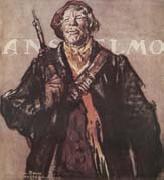 |
Dan sayre Groesbeck
|
|
A California illustration artist.
American , 1879-1950
|
|
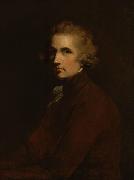 |
Daniel Gardner
|
|
United Kingdom (1750 -1805 ) - Drawer
|
|
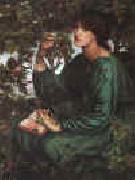 |
Dante Gabriel Rossetti
|
|
English Pre-Raphaelite Painter, 1828-1882
Rossetti's first major paintings display some of the realist qualities of the early Pre-Raphaelite movement. His Girlhood of Mary, Virgin and Ecce Ancilla Domini both portray Mary as an emaciated and repressed teenage girl. His incomplete picture Found was his only major modern-life subject. It depicted a prostitute, lifted up from the street by a country-drover who recognises his old sweetheart. However, Rossetti increasingly preferred symbolic and mythological images to realistic ones. This was also true of his later poetry. Many of the ladies he portrayed have the image of idealized Botticelli's Venus, who was supposed to portray Simonetta Vespucci.
Although he won support from the John Ruskin, criticism of his clubs caused him to withdraw from public exhibitions and turn to waterhum, which could be sold privately.
In 1861, Rossetti published The Early Italian Poets, a set of English translations of Italian poetry including Dante Alighieri's La Vita Nuova. These, and Sir Thomas Malory's Morte d'Arthur, inspired his art in the 1850s. His visions of Arthurian romance and medieval design also inspired his new friends of this time, William Morris and Edward Burne-Jones. Rossetti also typically wrote sonnets for his pictures, such as "Astarte Syraica". As a designer, he worked with William Morris to produce images for stained glass and other decorative devices.
Both these developments were precipitated by events in his private life, in particular by the death of his wife Elizabeth Siddal. She had taken an overdose of laudanum shortly after giving birth to a stillborn child. Rossetti became increasingly depressed, and buried the bulk of his unpublished poems in his wife's grave at Highgate Cemetery, though he would later have them exhumed. He idealised her image as Dante's Beatrice in a number of paintings, such as Beata Beatrix.
These paintings were to be a major influence on the development of the European Symbolist movement. In these works, Rossetti's depiction of women became almost obsessively stylised. He tended to portray his new lover Fanny Cornforth as the epitome of physical eroticism, whilst another of his mistresses Jane Burden, the wife of his business partner William Morris, was glamorised as an ethereal goddess.
|
|
 |
David Gilmour Blythe
|
|
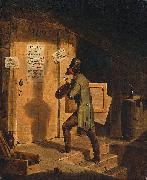
(May 9, 1815 - May 15, 1865) was a self-taught American artist best known for paintings which satirically portrayed political and social situations.
Blythe was born in East Liverpool, Ohio on May 9, 1815 to poor parents of Scottish and Irish ancestry. After a childhood in a log cabin by the Ohio River, at the age of 16, Blythe moved to Pittsburgh, Pennsylvania. There he apprenticed himself to woodcarver Joseph Woodwell. In his subsequent work as an itinerant portrait painter, Blythe traveled widely from Baltimore to Philadelphia and perhaps as far as New Orleans. Other than his stint with Woodwell, Blythe had no known artistic education or training.
|
|
 |
DAVID, Gerard
|
|
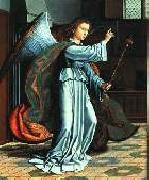
Netherlandish Northern Renaissance Painter, ca.1460-1523
Netherlandish painter. He is known as the last of the 'Flemish Primitives'. Although born in the northern Netherlands, he moved to Bruges as a young man, and most of his work expresses the impassive, unmannered, microscopically realistic approach peculiar to south Netherlandish art in the time of Jan van Eyck. David was skilled at synthesizing the art of several important south Netherlandish predecessors, adapting, for instance, the compositions of van Eyck and the technique of Hugo van der Goes. He was also influenced by Hans Memling,
|
|
 |
Domenicho Ghirlandaio
|
|
Renaissance Artists , 1449-94
|
|
 |
Domenico Ghirlandaio
|
|
Italian
1449-1494
Domenico Ghirlandaio Galleries
Painter, mosaicist and possibly goldsmith. He was head of one of the most active workshops in late 15th-century Florence. He developed a style of religious narrative that blended the contemporary with the historical in a way that updated the basic tenets of early Renaissance art. Domenico documented material situation
|
|
 |
Domingo Garcia y Vasquez
|
|
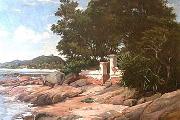
painted Ponta do Cavalao - Niteroi in 1883
|
|
 |
DOU, Gerrit
|
|
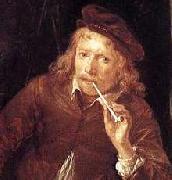
Dutch Baroque Era Painter, 1613-1675
Dutch painter. The first and most famous member of the group of artists referred to as the LEIDEN 'FINE' PAINTERS, he specialized in small-format paintings, the details and surfaces of which are carefully observed and meticulously rendered. He was greatly praised as a painter of artificial light by Samuel van Hoogstraten in 1678, and he was responsible for popularizing both the night scene and the 'niche' format, pictorial devices ultimately derived from the art of his famous master, Rembrandt.
|
|
 |
DUGHET, Gaspard
|
|
French Baroque Era Painter, 1615-1675
Italian painter. He was one of the most distinguished landscape painters working in Rome in the 17th century, painting decorative frescoes and many easel paintings for such major Roman patrons as Pope Innocent X and the Colonna family. He is associated with a new genre of landscape, the storm scene, although of some 400 catalogued works little more than 30 treat this theme. His most characteristic works depict the beauty of the scenery around Rome, particularly near Tivoli, and suggest the shifting patterns of light and shade across a rugged terrain. Dughet drew from nature, yet his landscapes are carefully structured, and figures in antique dress suggest the ancient beauty of a landscape celebrated by Virgil. Very few can be securely dated; his development may be inferred from his few dated fresco paintings and from the wider context in which he was working. Most writers, following Pascoli, have divided Dughet's career into three periods.
|
|
 |
Durrie George Henry
|
|
American Painter
b.1820 d.1863
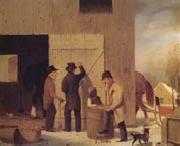
Durrie and his older brother John (1818-98) studied sporadically from 1839 to 1841 with the portrait painter Nathaniel Jocelyn. From 1840 to 1842 he was an itinerant painter in Connecticut and New Jersey, finally settling permanently in New Haven. He produced c. 300 paintings, of which the earliest were portraits (e.g. Self-portrait, 1839; Shelburne, VT, Mus.); by the early 1850s he had begun to paint the rural genre scenes and winter landscapes of New England that are considered his finest achievement. His landscapes, for example A Christmas Party (1852; Tulsa, OK, Gilcrease Inst. Amer. Hist. & A.), are characterized by the use of pale though cheerful colours and by the repeated use of certain motifs: an isolated farmhouse, a road placed diagonally leading the eye into the composition, and a hill (usually the West or East Rocks, New Haven) in the distance. By the late 1850s Durrie's reputation had started to grow, and he was exhibiting at prestigious institutions, such as the National Academy of Design. In 1861 the firm of Currier & Ives helped popularize his work by publishing prints of two of his winter landscapes, New England Winter Scene (1858; Mr and Mrs Peter Frelinghuysen Carleton priv. col.) and the Farmyard in Winter.
|
|
 |
Earle Grantham Teale
|
|
American , 1886-1919
|
|
 |
Edmund George Warren,RI
|
|
1834-1909
|
|
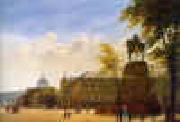 |
Eduard Gaertner
|
|
1801-1877
German
Eduard Gaertner Gallery
German painter and lithographer. His father was a master carpenter and his mother a gold embroiderer, and he had his first drawing lessons in 1811 in Kassel, where he had gone with his mother after the occupation of Berlin. After returning to Berlin he became in 1814 an apprentice painter at the Kenigliche Porzellanmanufaktur; and from 1821 he studied under Carl Wilhelm Gropius (1793-1870), then engaged as a painter of stage sets at the Kenigliches Theater in Berlin and also known for his townscapes. Here Gaertner developed skill in the rendering of perspective. He first exhibited at the Akademie der Kenste, Berlin, in the following year. In 1824-5 he was commissioned to paint interior views of Berlin Cathedral (see fig.) and the chapel of the Schloss Charlottenburg (both Berlin, Schloss Charlottenburg). In return, he was granted funds to enable him to spend three years in Paris, where he studied under Francois Bertin. Gaertner views of Paris already show his gift for lighting and use of staffage. His special ability lay in his understanding of the character of a city as the work of its inhabitants. After his return to Berlin he swiftly established himself as the leading painter of urban views, which he regularly showed at Berlin Akademie exhibitions. Interest in this genre grew along with the spate of building activity in Berlin after the end of the wars against Napoleon. There was a fresh interest in paintings of new buildings in particular, intended for a local rather than a visitors market. Two large views of the former Berlin Schloss, The Schleterhof and The Eosanderhof (both 1831; Potsdam, Neues Pal.), show Gaertner bold use of light and shadow. With the six-part panorama View over Berlin from the Roof of the Friedrich-Wedersche Church (1834; Berlin, Schloss Charlottenburg) Gaertner showed the spread of the city by this time. After painting a replica of this work for the Prussian king daughter Alexandra Feodorovna, Empress of Russia, in 1835-6 (St Petersburg, Hermitage), Gaertner visited Russia in 1837, and again from 1838 to 1839, staying in both St Petersburg and Moscow. He completed a large number of city views, including a three-part view of The Kremlin (1839; Berlin, Schloss Charlottenburg), commissioned by Frederick William III. With the death of the Prussian king in 1840, Gaertner lost his most powerful patron and interest in his work began to wane as it came to seem too stiff and objective to Romantic sensibilities. Gaertner tried to adapt to the change in taste, adopting a more painterly approach; in particular, he paid attention to effects of lighting. The vogue for city views had passed its peak, however, and Gaertner turned to landscape painting. Journeys to Prague in 1841-2, through West and East Prussia in 1845-6, and to Silesia in 1848-51 introduced new subjects; but it was architecture rather than setting that most engaged Gaertner attention. At this period he occasionally also invented ideal landscape settings for real buildings, as in the Ruined Monastery of Lehnin in an Imaginary Mountain Landscape (Berlin, Schloss Charlottenburg). Gaertner also produced watercolours of interiors and lithographs of both landscape and city views; but after the middle of the century his productivity in all respects dwindled. (An example of his work from this period is his oil painting of the Bauakademie and Friedrich-Wedersche-Kirche in Berlin (1868; Berlin, Tiergarten, N.G.; see SCHINKEL, KARL FRIEDRICH, fig. 2).) The rise of photography appeared to be making the architectural painter redundant.
|
|
 |
Eduard von Grutzner
|
|
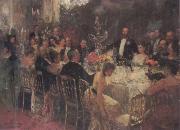
(May 26, 1846 - April 2, 1925) was a German painter and professor of art especially noted for his genre paintings of monks.
Gretzner was born in 1846, the youngest of children, into a farming family in Groß-Karlowitz near Neisse, Upper Silesia in what is now Poland. The local pastor often visited his parents' home, as his father was a prominent member of the church. He recognized early on Eduard's talent and inclination for painting. Even as a child he drew on everything that fell into his hands. The administrator of a ducal country house in the neighborhood got him paper, and eventually the pastor gained him entrance to the Gymnasium (a university preparatory school) of Neisse, and brought him in 1864 with the help of an architect Hirschberg for art education at the private school of Herman Dyck in Munich.
|
|
 |
Eduardo Leon Garrido
|
|
Spanish
1856-1906
|
|
 |
Eduardo Rosales Gallinas
|
|
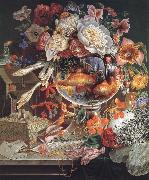
Spanish , Madrid, 1836 - Madrid, 1873
|
|
 |
Edward Ashton Goodes
|
|
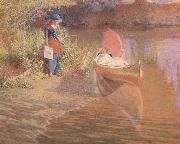
b.1832 d.1910
|
|
 |
Edward john Gregory,RA.RI
|
|
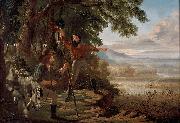
1850-1909
|
|
 |
Edward Jukes Greig
|
|
b. 1839 Melbourne, Victoria
Also known as E. J. G.
Artist (Draughtsman), (Cartoonist / Illustrator), (Painter)
Colonial Victorian painter, cartoonist and illustrator.
Birth datec.1839Birth placeMelbourne, VictoriaDeath date4 October 1864Death placeSydney, New South Wales.
Residence 1864 11 Crown Street, Millers Point, Sydney, New South Wales
c.1860- c.1864 171 Victoria Parade, Melbourne, Victoria
Active Period 1860- 1864
|
|
 |
EECKHOUT, Gerbrand van den
|
|
Dutch Baroque Era Painter, 1621-1674
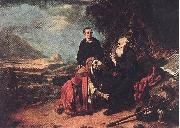
Dutch painter, draughtsman and etcher. He was the son of the goldsmith Jan Pietersz. van den Eeckhout and 'a great friend' as well as a pupil of Rembrandt, according to Houbraken, who commented that van den Eeckhout painted in the style of his master throughout his career. This is certainly true of van den Eeckhout's (biblical) history paintings, but less so of either his portraits, which gradually displayed more Flemish elegance, or his genre pieces (from 1650), in which he followed various trends; he adapted his style to suit his subject with sensitive versatility. He was also a gifted colourist and an artist of great imagination, superior in both these respects to such better-known Rembrandt pupils as Ferdinand Bol and Nicolaes Maes. Moreover, he was extremely productive, and there is at least one dated painting for virtually every year between 1641 and 1674. In addition, he created a large body of drawings comprising histories, figures, landscapes and genre scenes executed in various media, including watercolour.
|
|
 |
Egide Charles Gustave Wappers
|
|
(23 August 1803 Antwerp - 6 December 1874 Paris) is best known as the Belgian painter Gustave Wappers, while his oeuvre is also reckoned Flemish. He signed works by the name Gustaf Wappers.
He studied at the Royal Academy of Fine Arts in Antwerp, and during 1826 in Paris. The Romantic movement with its new ideas about art and politics was astir in France. Wappers was the first Belgian artist to take advantage of this state of affairs, and his first painting, "The Devotion of the Burgomaster of Leiden," appeared at the appropriate moment and had marvellous success in the Brussels Salon during 1830, the year of the Belgian Revolution. While political, this remarkable work revolutionized the direction of Flemish painters.
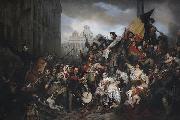
Episode of the Belgian Revolution of 1830 (1834), Museum of Ancient Art, Brussels.Wappers was invited to the court at Brussels, and was favoured with commissions. In 1832 the city of Antwerp appointed him Professor of Painting. He exhibited his masterpiece, "Episode of the Belgian Revolution of 1830" or rather "Episode of the September Days of 1830 on the Grand Place of Brussels", (Museum of Ancient Art, Brussels) at the Antwerp Salon in 1834. He was subsequently appointed painter to Leopold, King of the Belgians. At the death of Matthieu-Ignace Van Bree in 1839 he was elavated to director of the Antwerp Academy. One of his pupils was Ford Madox Brown; another was the Czech history painter Karel Javůrek.
His works are numerous; some of them in traditional devotional modes ("Christ Entombed"), while others illustrate the Romantic view of history: "Charles I taking leave of his Children", "Charles IX", "Camoens", "Peter the Great at Saardam", and "Boccaccio at the Court of Joanna of Naples".
Louis Philippe gave him a commission to paint a large painting for the gallery at Versailles, "The Defence of Rhodes by the Knights of St John of Jerusalem". He finished the work in 1844, the same year that he received the title of baron from Leopold I.After retiring as director of the Antwerp Academy, he settled in 1853 in Paris, where he died in 1873 - having been one of the most talented flagships of Romanticism in Belgium.
|
|
 |
El Greco
|
|
Greek-born Spanish Mannerist Painter, 1541-1614
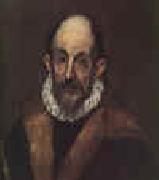
Considered a representative of late Renaissance Spanish art, El Greco was actually born in Greece, on the island of Crete. After studying in Venice under Titian, El Greco settled in Toledo, Spain in 1577. At the time he was wildly popular, his emotionally religious paintings being just the ticket for the hometown of the Spanish Inquisition. After his death his work was largely ignored until the beginning of the 20th century; now he considered one of the inspired geniuses of Western art. His distinctive style features bold shapes and colors, with elongated and slightly distorted figures.
In Toledo El Greco was in constant demand and liked living large: he maintained a private orchestra to accompany his meals.
|
|
 |
elias martin, gustav
|
|
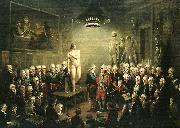
Elias Martin, döpt 8 mars 1739 i Stockholm, död 25 januari 1818, svensk målare som vann internationell berömmelse under sin livstid för sina landskapsmålningar, porträtt och genremålningar, och var "associate member" av Royal Academy.
Elias Martin var son till åldermannen i snickarämbetet Olof Martin och Ulrika Haupt, syster till Georg Haupt. Han fick sin första utbildning hos fadern och visade sådan talang att han sändes till ämbetsmålaren F.C. Schultz. Genom denne fick han anställning hos Fredrik Henrik af Chapman som arkitekturritare och teckningslärare för officerarna i Sveaborg. Där fick han ledning av fältmarskalken Augustin Ehrensvärd, och umgick med och undervisade dennes son Carl August Ehrensvärd.
|
|
 |
Elioth Gruner
|
|
New Zealand-born Australian Painter, 1882-1939,Australian painter. The son of a Norwegian father and Irish mother, he came to Sydney from New Zealand with his family in 1883. He received his first art lessons from Julian Rossi Ashton, although for many years he had little time for painting, instead working to support his family. He finally achieved recognition as an artist around the beginning of World War I. Following successful sales he became a full-time painter, championed in Sydney as the exemplary heir to the impressionist pastoral tradition of Australian art, which had been established in the late 19th century. Between 1915 and 1920, under the influence of Max Meldrum, he focused on the landscape as seen against the light. Painting en plein air he specialized in effects of early morning, for example Morning Light (1916; Sydney, A.G. NSW), one of a series painted at Emu Plains (1915-19),
|
|
 |
Elisabeth Geertruida Wassenbergh
|
|
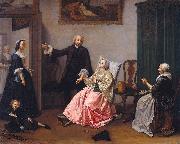
painted Het doktersbezoek in 1760
|
|
 |
Elizabeth Gardner Bouguereau
|
|
1837-1922
|
|
 |
Elizabeth Jane Gardner
|
|
(October 4, 1837-January 28, 1922) was an American academic and salon painter, who was born in Exeter, New Hampshire. She was an American expatriate who died in Paris where she had lived most of her life. She studied in Paris under the figurative painter Hugues Merle (1823-1881), the well-known salon painter Jules Joseph Lefebvre (1836-1911), and finally under William-Adolphe Bouguereau (1825-1905). After Bouguereau's wife died, Gardner became his paramour and after the death of his mother, who bitterly opposed the union, she married him in 1896. She adopted his subjects, compositions and even his smooth facture, adopted them so successfully that some of her work might be mistaken for his. Gardner's best known work may be The Shepherd David Triumphant (1895), which shows the young shepherd with the lamb he has rescued. Among her other works were "Cinderella," "Cornelia and Her Jewels," "Corinne," "Fortune Teller," "Maud Muller," "Daphne and Chloe," "Ruth and Naomi," "The Farmer's Daughter," "The Breton Wedding," and some portraits.
|
|
|
|
|
|
|
|
|
| Wholesale China Oil Painting Wholesale Oil Painting China Xiamen Portrait Reproduction on canvas Chinese Oil Painting Wholesale USA Oil Painting |
|
|
|
|


